
Exciting new series on “Voice, Body and Movement for Lawyers – How to connect with the jury and find Justice Through Dramatic Technique!”
Click here to find out more
In this session we will discuss one of the most important, but must neglected, documents in any professional services, outsourcing, implementation, software development, and other technology transactions: the statement of work. Without careful attention, statements of work frequently lead to cost overruns, project delays, and disputes. By far, the most common failure point in a technology transaction is a poorly drafted statement of work.
Attendees will receive real-world examples and techniques for reducing risks in these documents. Those techniques can be put immediately to good use.
Confidentiality Agreements (also called NDAs) are too often treated as routine. So routine, th...

New York City’s new Non-Primary Residence Property Surcharge—commonly known as the pied-...
Class action waivers in arbitration agreements remain enforceable, but a decade of U.S. Supreme Cour...

I was wrongfully separated from the military and I will get no military pay and disability retiremen...

This program provides a practical roadmap to mastering every stage of the discovery process in civil...
2026 was a very important year when it comes to federal procurement developments, Artificial Intelli...
This seminar concerns a scope, jurisdiction, and exceptions to the Federal Arbitration Act. The Act ...

Data privacy remains one of the most rapid areas of growth in the class action space. Plaintiffs con...
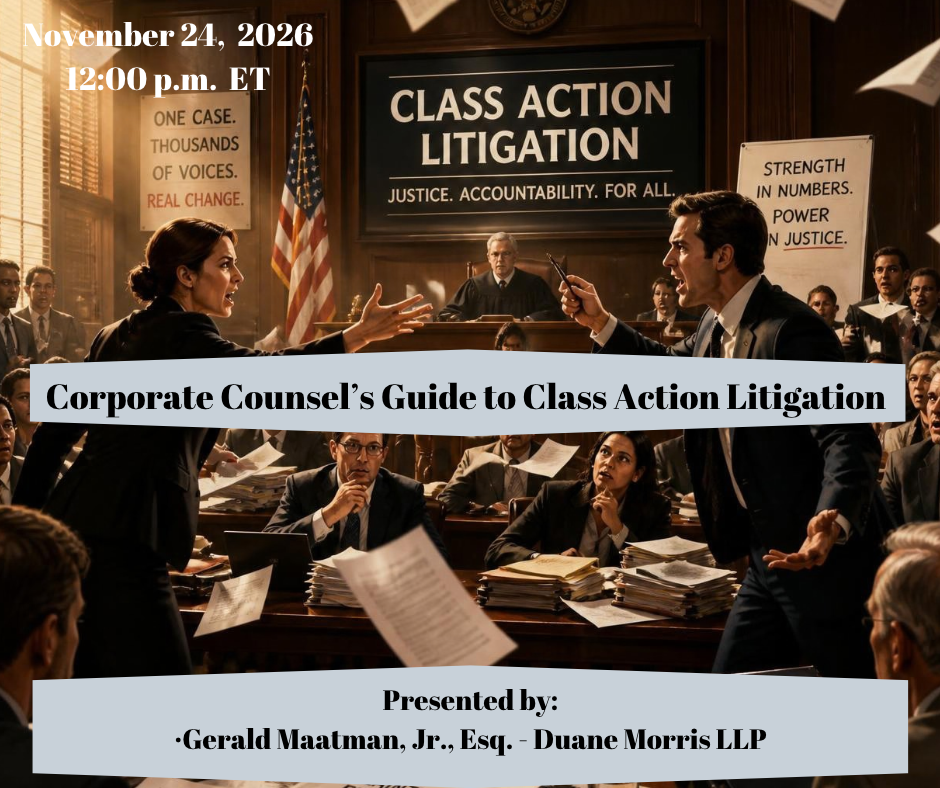
Class action litigation continues to expand in both number of filings and monetary exposure, with se...

Perfectionism is often rewarded in the legal profession. It drives attention to detail, thorough pre...