
Exciting new series on “Voice, Body and Movement for Lawyers – How to connect with the jury and find Justice Through Dramatic Technique!”
Click here to find out more
This program will discuss how California’s Private Attorneys General Act (“PAGA”), the Viking River Cruises decision, and Assembly Bill 51 (AB 51), which was scheduled to become law in 2020, intersected to create a conundrum in the state of mandatory arbitration for employers until the Ninth Circuit Court of Appeals recently ruled in Chamber of Commerce v. Bonta that the Federal Arbitration Act (FAA) broadly preempts state rules (i.e., AB 51) against arbitration. The Ninth Circuit decision was a triumph for California employers as a means to mitigate exposure in employment related disputes. However, it is unclear whether California will appeal the decision to the Ninth Circuit en banc or to the U.S. Supreme Court.
Attendees of the program will:
• Obtain a clear understanding of the significance of the ruling and key takeaways for employers.
• Learn what immediate next steps should be taken by employers to mitigate exposure.
• Receive drafting tips and advice for revising settlement agreements to further mitigate exposure.
• Be prepared for what may happen next if the state appeals the Bonta decision and frustrate what, by all accounts, is a major win for California employers.
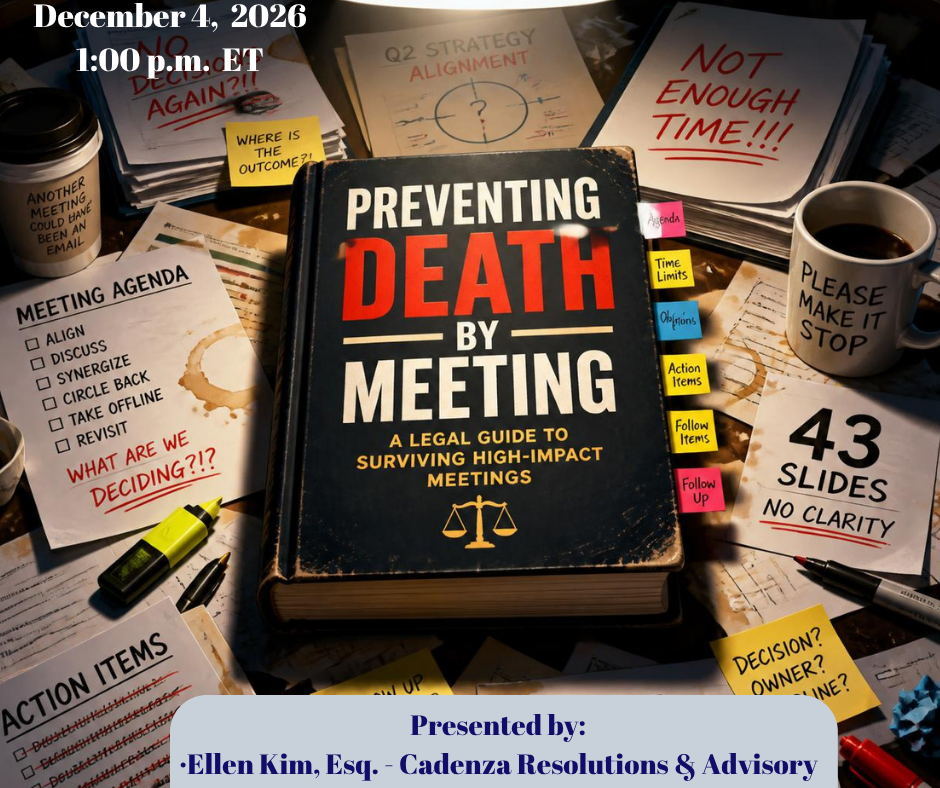
Lawyers lose hundreds of billable and operational hours every year to poorly managed meetings. Unfoc...
During this course you will take a deep dive into federal bid protest litigation at the U.S. Court o...
This course on trade secrets litigation provides real-world best practices through all key stages of...

Adverse and derogatory information often has devastating effects on a contractor's ability to win co...
Class action litigation presents significant legal and business challenges for employers and corpora...
This program provides a practical roadmap to mastering every stage of the discovery process in civil...
This program will discuss how to design and implement legally sound diversity, equity, and inclusion...
Class action waivers in arbitration agreements remain enforceable, but a decade of U.S. Supreme Cour...

This course is meant for lawyers of all levels and areas of practice, and in it, we will explore way...

During this course, you will learn about best practices and strategies for retaining intellectual pr...