
Exciting new series on “Voice, Body and Movement for Lawyers – How to connect with the jury and find Justice Through Dramatic Technique!”
Click here to find out more
The court-approval requirement for settlements under the Fair Labor Standards Act (FLSA) has long posed challenges for employers and employees alike. Since the U.S. Court of Appeals for the Eleventh Circuit’s seminal decision in 1982 in Lynn’s Food Stores v. United States holding that parties are required to obtain court approval of FLSA settlements, courts around the country largely have followed its requirements. However, over the last several years, several federal courts increasingly have questioned this requirement, casting doubt on the continued vitality of Lynn’s Food.
This course will examine:
• The history of the court-approval requirement for settlements under FLSA, beginning with the Eleventh Circuit’s seminal Lynn’s Food case.
• The post-Lynn’s Food split among federal courts, including an examination of recent cases Alcantara v. Duran Landscaping and Askew v. Inter-Continental Hotels.
• The current landscape for settlements under the FLSA and how attorneys on both sides of wage and hour disputes address the requirement.
Class action waivers in arbitration agreements remain enforceable, but a decade of U.S. Supreme Cour...
2026 was a very important year when it comes to federal procurement developments, Artificial Intelli...
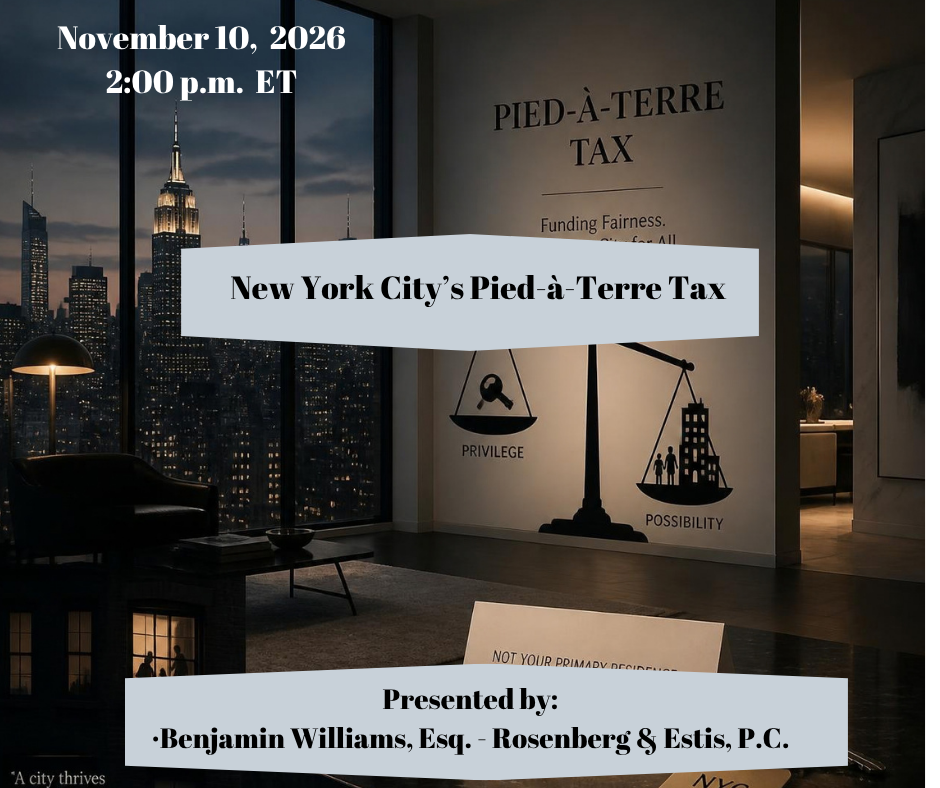
New York City’s new Non-Primary Residence Property Surcharge—commonly known as the pied-...
The practice of law places legal professionals under extraordinary and often chronic stress, making ...
As the largest purchaser of goods and services in the world, the United States Government requires f...
This seminar concerns a scope, jurisdiction, and exceptions to the Federal Arbitration Act. The Act ...
Class action litigation presents significant legal and business challenges for employers and corpora...
Lawyers lose hundreds of billable and operational hours every year to poorly managed meetings. Unfoc...
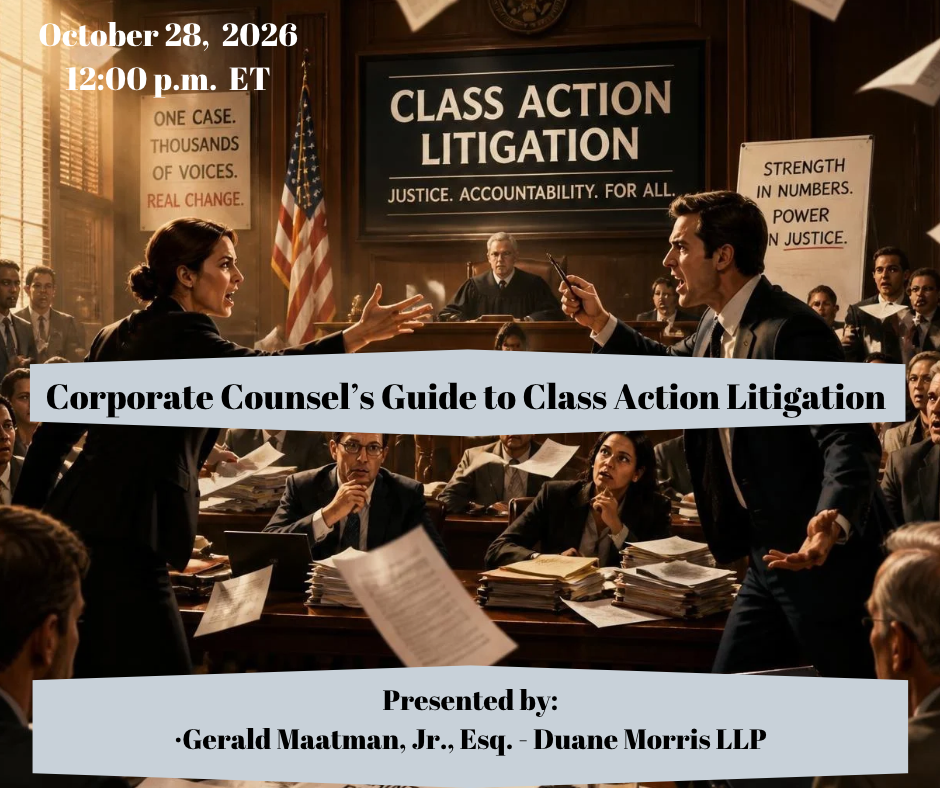
Class action litigation continues to expand in both number of filings and monetary exposure, with se...

This course is meant for lawyers of all levels and areas of practice, and in it, we will explore way...