
Exciting new series on “Voice, Body and Movement for Lawyers – How to connect with the jury and find Justice Through Dramatic Technique!”
Click here to find out more
New York’s Marijuana Regulation and Taxation Act of 2021 paved the way for a huge legal recreational cannabis market in the country’s fourth most-populous state. Once the market opens up, this “green rush” promises to be enormously lucrative—for companies that succeed in getting (and keeping) a license from New York’s Cannabis Control Board.
This webinar will lay out the importance of a robust, proactive compliance and anti-diversion program for license applicants and awardees, as well as the steps your clients can take now, even before New York adopts its new cannabis regulations, to implement such a program.
This seminar concerns a scope, jurisdiction, and exceptions to the Federal Arbitration Act. The Act ...
Data privacy remains one of the most rapid areas of growth in the class action space. Plaintiffs con...
As the largest purchaser of goods and services in the world, the United States Government requires f...
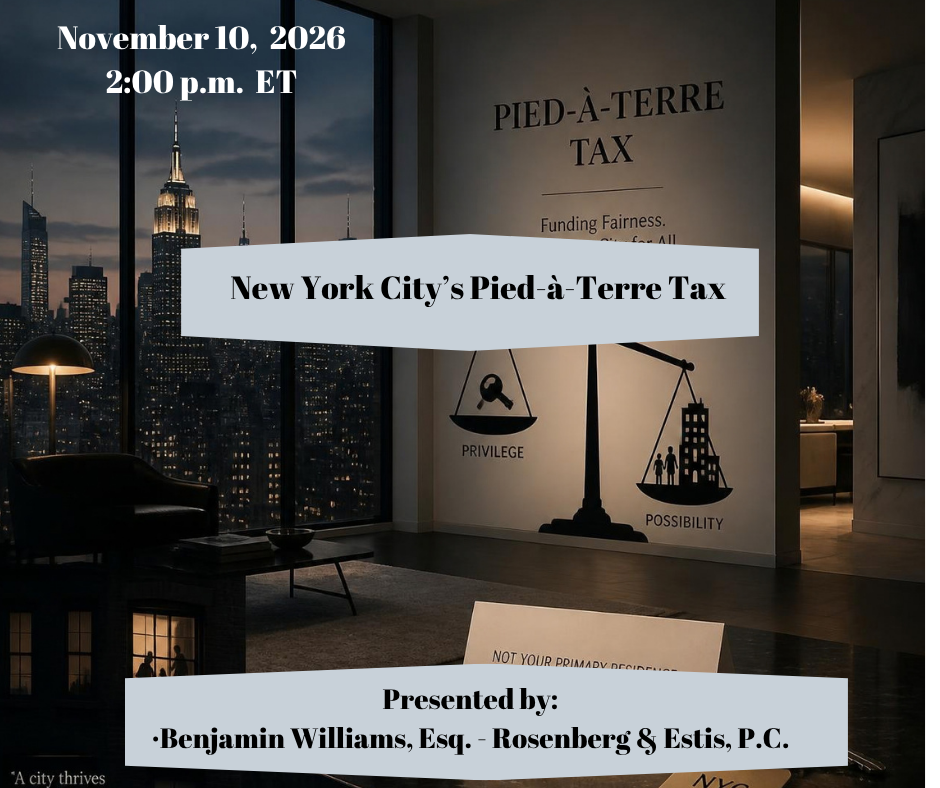
New York City’s new Non-Primary Residence Property Surcharge—commonly known as the pied-...

This course is meant for lawyers of all levels and areas of practice, and in it, we will explore way...

Class action litigation presents significant legal and business challenges for employers and corpora...
This course on trade secrets litigation provides real-world best practices through all key stages of...

I was wrongfully separated from the military and I will get no military pay and disability retiremen...
This program provides a practical roadmap to mastering every stage of the discovery process in civil...
Confidentiality Agreements (also called NDAs) are too often treated as routine. So routine, th...