
Exciting new series on “Voice, Body and Movement for Lawyers – How to connect with the jury and find Justice Through Dramatic Technique!”
Click here to find out more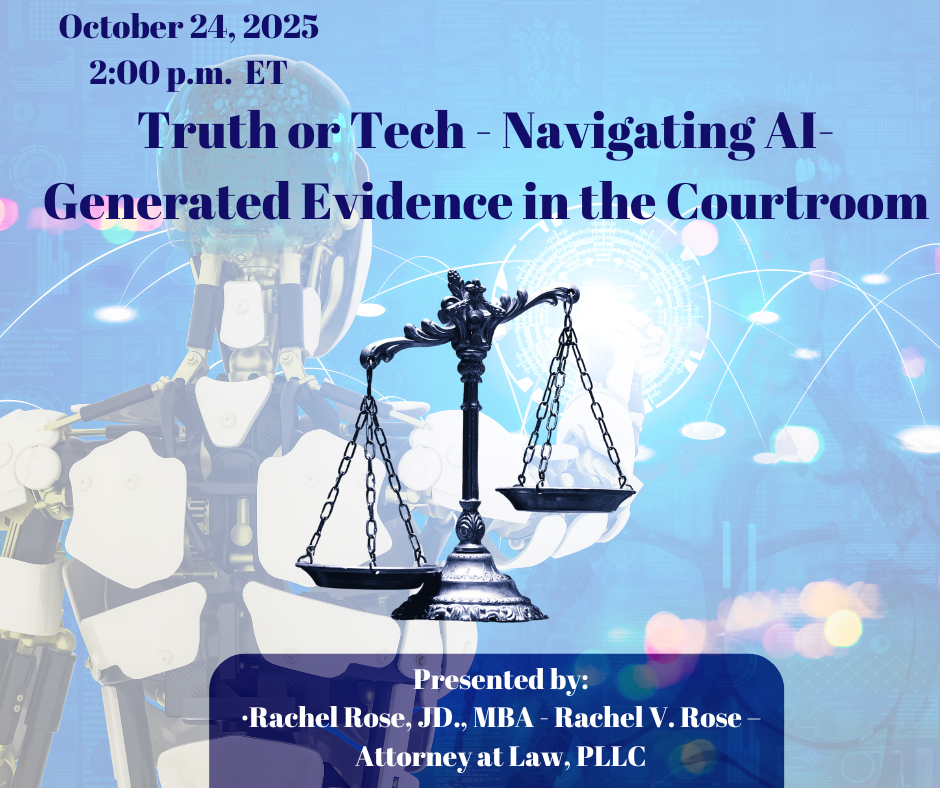
As technology advances, the manipulation of digital content has become more sophisticated and accessible than ever. It is now easier to generate or alter photos, videos, audio recordings, and even handwriting, raising critical questions about the integrity of evidence presented in legal proceedings. With the rise of AI-generated content, we must consider how these advancements can potentially compromise the reliability of evidence in court.
This presentation addresses the need for legal professionals to understand and respond to the challenges posed by AI manipulation. We will explore whether our existing authentication rules are sufficient to withstand the complexities introduced by AI-generated evidence.
In this CLE webinar, Contract Negotiations in the Fast Lane for Lawyers: Leveraging Redlining as a P...

In this presentation, Vanessa Terzian uses examples from actual client documents to demonstrate comm...
Session 7 of 10 - Mr. Kornblum, a highly experienced trial and litigation lawyer for over 50 years, ...
Session 5 of 10 - Mr. Kornblum, a highly experienced trial and litigation lawyer for over 50 years, ...
In addition to the fears about Opening Statements and Closing Arguments that lawyers know about &nda...
Recent studies have shown that there has been a dramatic increase in impairment due to alcoholism, a...
Permission to Pivot: Ethics, Well-Being, and Redefining Your Legal Career examines the intersection ...
Session 9 of 10 - Mr. Kornblum, a highly experienced trial and litigation lawyer for over 50 years, ...

This course will cover fundamental aspects of state telehealth laws and regulations. Attendees will ...

This program will cover the sources from which practitioners can gather documents, witnesses, and ot...