
Exciting new series on “Voice, Body and Movement for Lawyers – How to connect with the jury and find Justice Through Dramatic Technique!”
Click here to find out more
The Corporate Transparency Act is going to change dramatically the way that founders and investors in privately-held companies interact with each other. The CTA, once implemented, will require roughly 25 million U.S. companies to file a beneficial ownership report with FinCEN, the Financial Crimes Enforcement Network of the U.S. Treasury. Understanding how the CTA will change the interactions between founders and investors will allow attorneys to modify the contractual relations between those parties in anticipation of the CTA coming into effect.
What You Will Learn :
• The categories of personally-identifiable information (PII) required for each of the company’s “company applicants” and “beneficial owners.”
• Understanding who is a “company applicant”
• Understanding who is a “beneficial owner”
• How does “substantial control” of the reporting company relate to an individual’s status as a “beneficial owner”
• What are the 23 categories of companies that are exempt from filing a beneficial ownership report
• When is a company required to file its first beneficial ownership report
• When is a company required to amend its beneficial ownership report
• Model clauses for shareholder agreements and LLC operating agreements required for CTA compliance
Who Should Attend:
This course is designed for attorneys and paralegals who advise clients on the formation of corporations, partnerships and LLCs. The coursework relates to the preparation of shareholder agreements and LLC operating agreements and provides model clauses that relate to the corporate governance implications of the CTA.
Class action litigation continues to expand in both number of filings and monetary exposure, with se...
If there is one word we continue to hear more than any other term as we continue to navigate through...

This course is meant for lawyers of all levels and areas of practice, and in it, we will explore way...
The Aftermath of Scams and Cybercrime: A Practical Guide to Response and Recovery examines the immed...

The practice of law places legal professionals under extraordinary and often chronic stress, making ...
This program will discuss how to design and implement legally sound diversity, equity, and inclusion...
Data privacy remains one of the most rapid areas of growth in the class action space. Plaintiffs con...

During this course, you will learn about best practices and strategies for retaining intellectual pr...

New York City’s new Non-Primary Residence Property Surcharge—commonly known as the pied-...
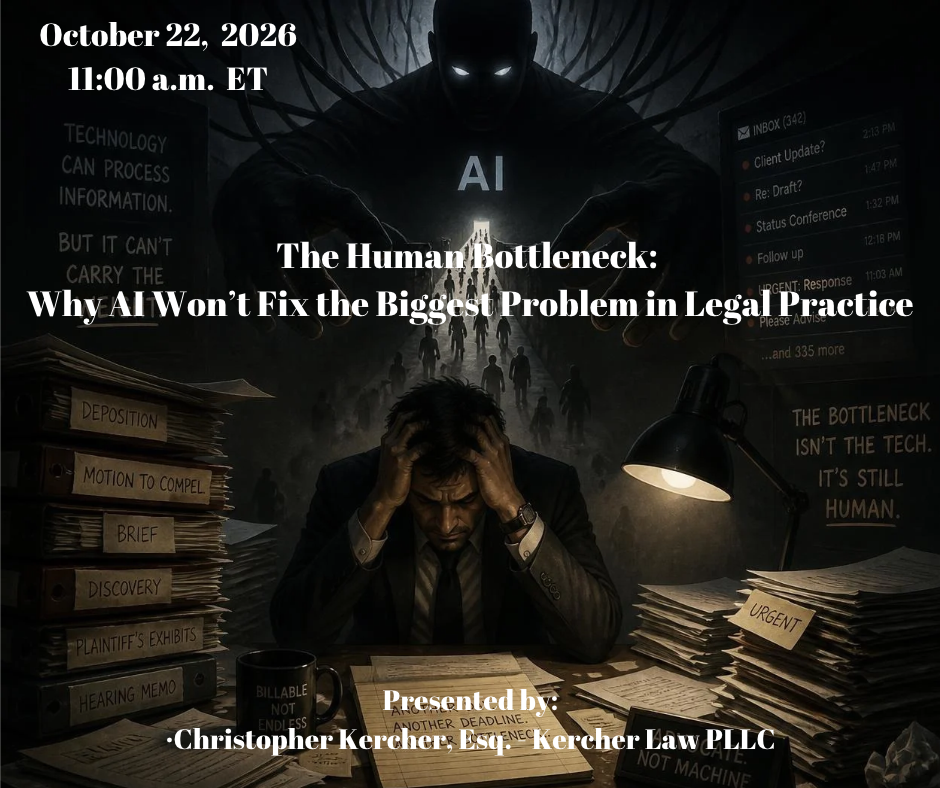
AI tools are advancing faster than legal organizations can absorb them. This program examines why th...