
Exciting new series on “Voice, Body and Movement for Lawyers – How to connect with the jury and find Justice Through Dramatic Technique!”
Click here to find out more
This CLE will focus on running a remote law practice with emphasis on the following:
• Best accounting practices, with a focus on software that allows for remote approval of trust, AP and billing actions
• Technology for remote lawyers and firms, including document storage, why VPNs are bad, and best software
• Establishing a strong communication structure
• Developing a unified structure and delegating in a remote setting
• New economic models for remote law firms (virtual and distributed firms)
• The advantages of the new models over the traditional law firm model
• Leveraging AI for enhanced document management, legal research and contract analysis in remote law practices
• Optimizing client engagement and service delivery through AI-driven virtual assistance and predictive analytics
• Bolstering remote law practices with AI-powered e-discovery and knowledge management
Confidentiality Agreements (also called NDAs) are too often treated as routine. So routine, th...

During this course, you will learn about best practices and strategies for retaining intellectual pr...

The practice of law places legal professionals under extraordinary and often chronic stress, making ...

2026 was a very important year when it comes to federal procurement developments, Artificial Intelli...
Adverse and derogatory information often has devastating effects on a contractor's ability to win co...
This program provides trial attorneys with a thorough grounding in the three principal currency repo...
This program provides a practical roadmap to mastering every stage of the discovery process in civil...
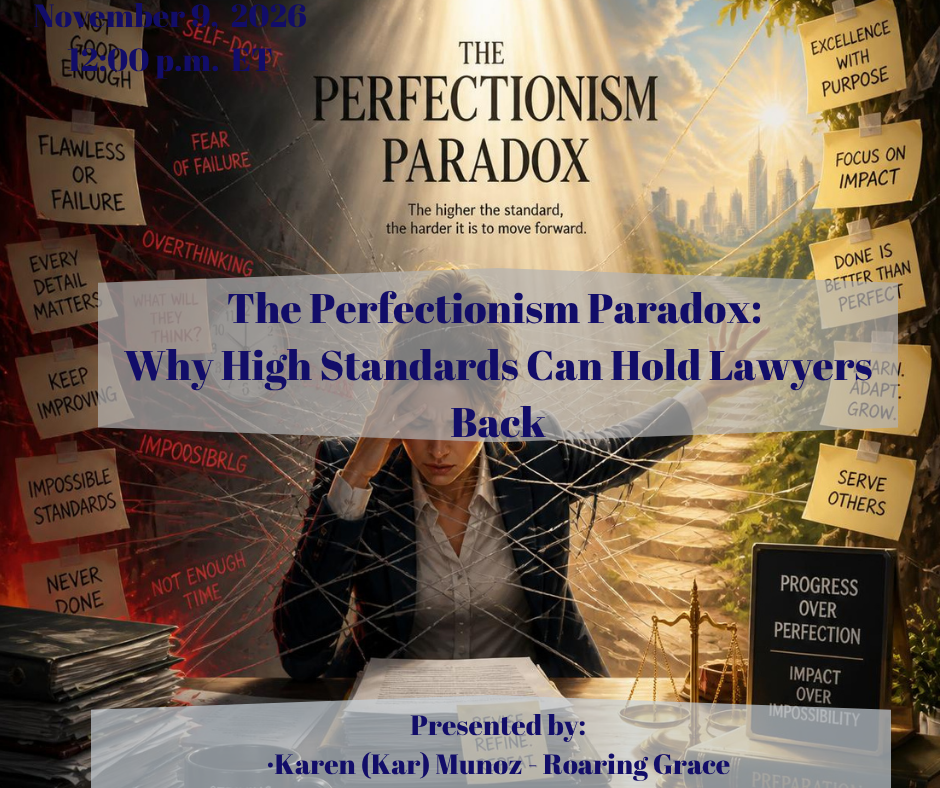
Perfectionism is often rewarded in the legal profession. It drives attention to detail, thorough pre...
Class action waivers in arbitration agreements remain enforceable, but a decade of U.S. Supreme Cour...

Data privacy remains one of the most rapid areas of growth in the class action space. Plaintiffs con...