
Exciting new series on “Voice, Body and Movement for Lawyers – How to connect with the jury and find Justice Through Dramatic Technique!”
Click here to find out more
As a former Naval intelligence officer who served with, among other units, SEAL Team 8, we regularly used a process called “Red Teaming” to expose problems in our own plans and processes. We tasked people with outside perspectives – members of different branches or specialties, different ranks, or even civilians – with the sole purpose of exposing flaws and weaknesses in our plans. In the M&A world, we have a similar concept – reverse diligence – which is an overlooked – but critical – part of a successful sale. The goal of reverse diligence is to look at your business from the perspective of a potential acquirer. This lets you find problems and mitigate them in advance of going to market. Reverse diligence is critical to a successful exit for your clients.
Key topics to be discussed:
• What is Red Teaming?
• How can we adapt its principles to Reverse Diligence?
• Why is Reverse Diligence critical to a successful M&A process?
• What can we learn from Reverse Diligence – and how can we fix problems ahead of time?
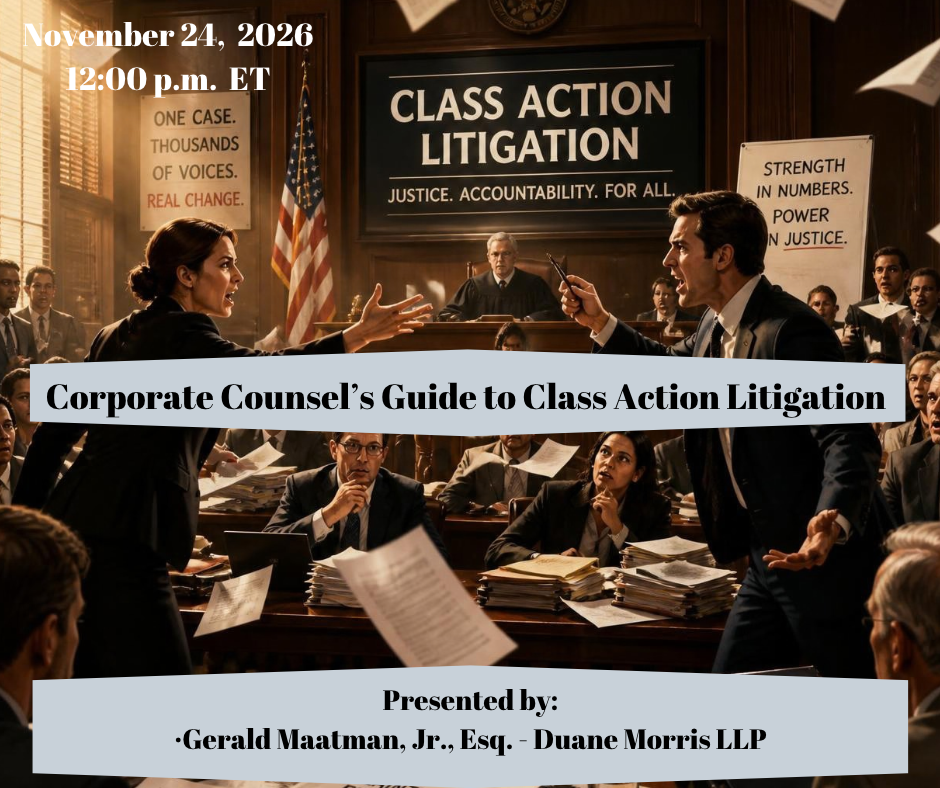
Class action litigation continues to expand in both number of filings and monetary exposure, with se...

This seminar concerns a scope, jurisdiction, and exceptions to the Federal Arbitration Act. The Act ...

This course is meant for lawyers of all levels and areas of practice, and in it, we will explore way...

Class action litigation presents significant legal and business challenges for employers and corpora...
2026 was a very important year when it comes to federal procurement developments, Artificial Intelli...

I was wrongfully separated from the military and I will get no military pay and disability retiremen...

During this course, you will learn about best practices and strategies for retaining intellectual pr...

This program provides trial attorneys with a thorough grounding in the three principal currency repo...
This course on trade secrets litigation provides real-world best practices through all key stages of...
Confidentiality Agreements (also called NDAs) are too often treated as routine. So routine, th...