
Exciting new series on “Voice, Body and Movement for Lawyers – How to connect with the jury and find Justice Through Dramatic Technique!”
Click here to find out more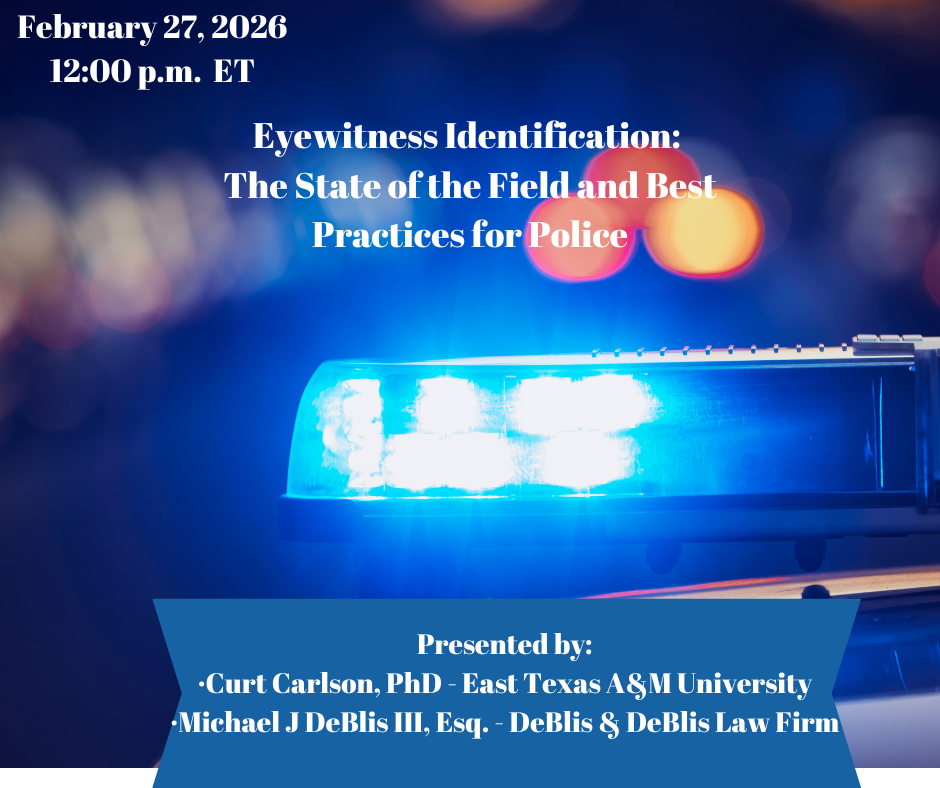
In this course, Dr. Carlson will present a broad overview of what scientific research has discovered about eyewitness identification, and the resulting best practices recommendations for police.
Specifically, he will cover the essential findings regarding how eyewitness memory is affected by: (a) aspects of the crime (e.g., distance, lighting, cross-race effect, weapon focus effect) and (b) police interactions with the eyewitness, including the identification procedure (e.g., showups, lineups). Based on this research, there are currently nine core recommendations from the scientific field of eyewitness identification to police, and Dr. Carlson will cover each of these. He will include information about what eyewitness evidence is actually probative of suspect guilt versus innocence.

Part 1 of 2 - Lawyers at all levels of experience and even sophisticated law firms and general couns...
This companion program to Part 1 goes deeper into the rhetorical power of Shakespeare, emphasizing h...
Part II builds on the foundation established in Part I by examining how classical rhetorical styles ...
This presentation teaches attorneys how to deliver memorized text—especially openings and clos...
Attorneys will receive a comparative analysis of GAAP and IFRS with emphasis on cross-border legal c...
Tailored for attorneys, this training demystifies EBITDA and contrasts it with GAAP- and IFRS-based ...
Part 2 - This program will continue the discussion from Part 1 focusing specifically on cross?examin...
This CLE session introduces attorneys to budgeting and forecasting concepts used in corporate planni...

Whether from poor drafting, conflicting case law, or simply the amounts in dispute, certain key cont...
The statistics are compelling and clearly indicate that 1 out of 3 attorneys will likely have a need...