
Exciting new series on “Voice, Body and Movement for Lawyers – How to connect with the jury and find Justice Through Dramatic Technique!”
Click here to find out more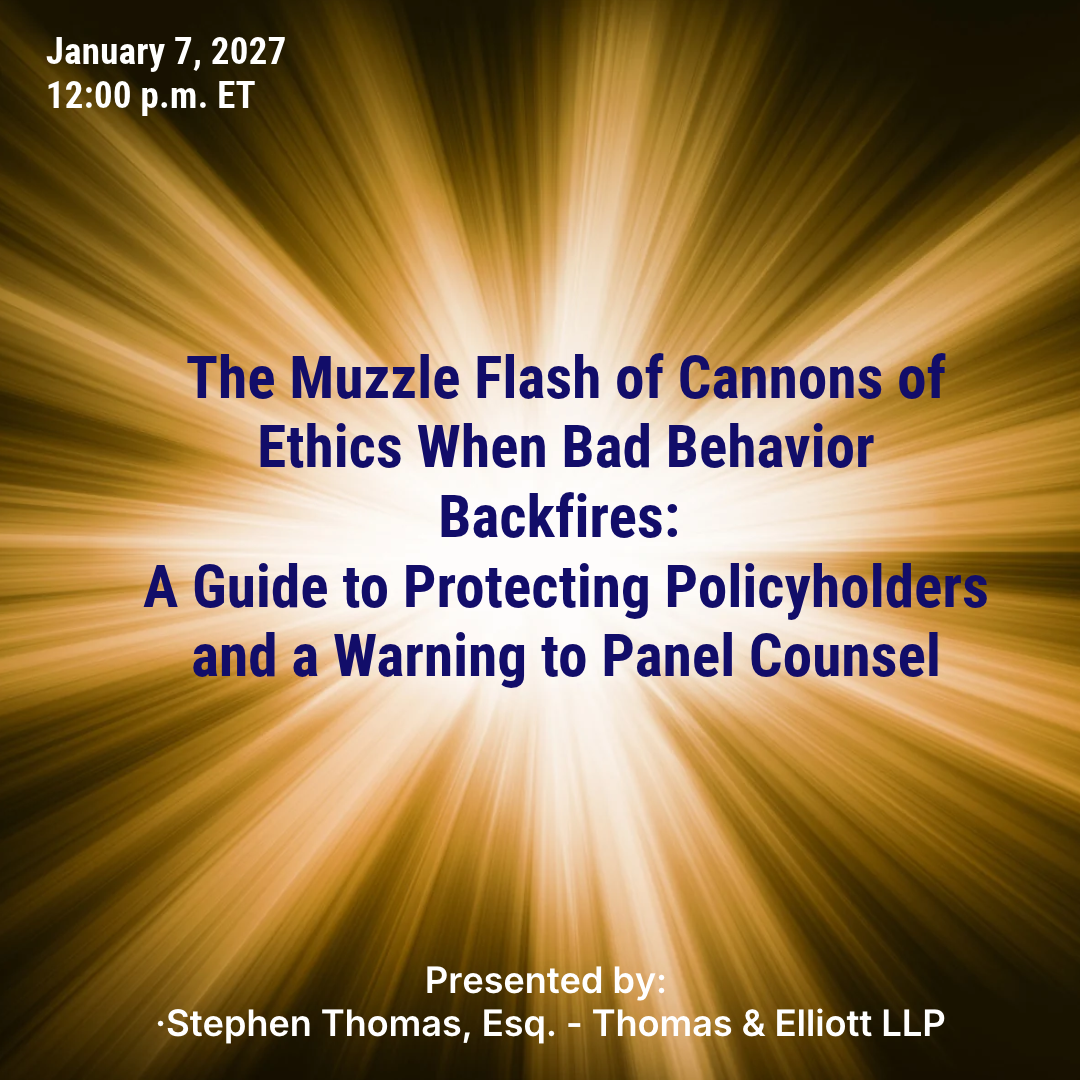
Millions of times per year, liability insurers hire panel counsel to defend policyholders in third party liability lawsuits. Panel counsel has a few ethical concerns when insurers accept full coverage so that the policyholder cannot get hurt. But when the insurer reserves its right to deny coverage, the policyholder remains at risk to pay for everything. Panel counsel who favor the interests of their paying insurers and ignore ethical obligations to at-risk policyholders invite vulnerability. Common excuses just don’t cut it: “The tripartite relationship eliminates ethical concerns,” “I don’t get involved in coverage,” “The scope of my representation is limited,” and “The insurer is not my client.” Resulting panel counsel vulnerability may create opportunities for general practitioners to protect policyholders.
Learning Objectives:
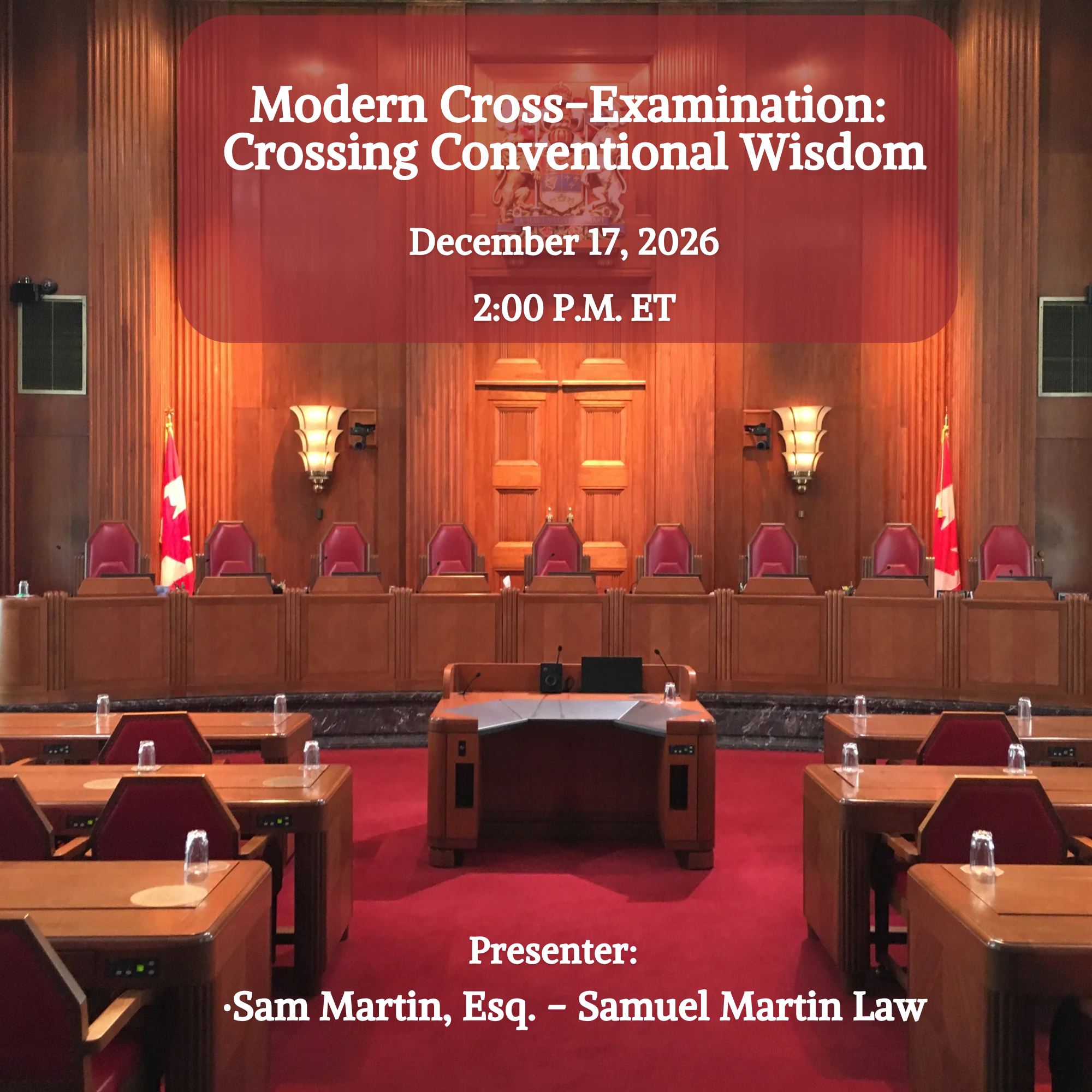
Attendees will learn how to effectively cross-examine witnesses at trial. The conventional wis...

Turn decades of client relationships into lasting equity. This practical CLE shows attorneys how to ...

The legal industry is in the middle of the largest generational transfer of law firm ownership in it...
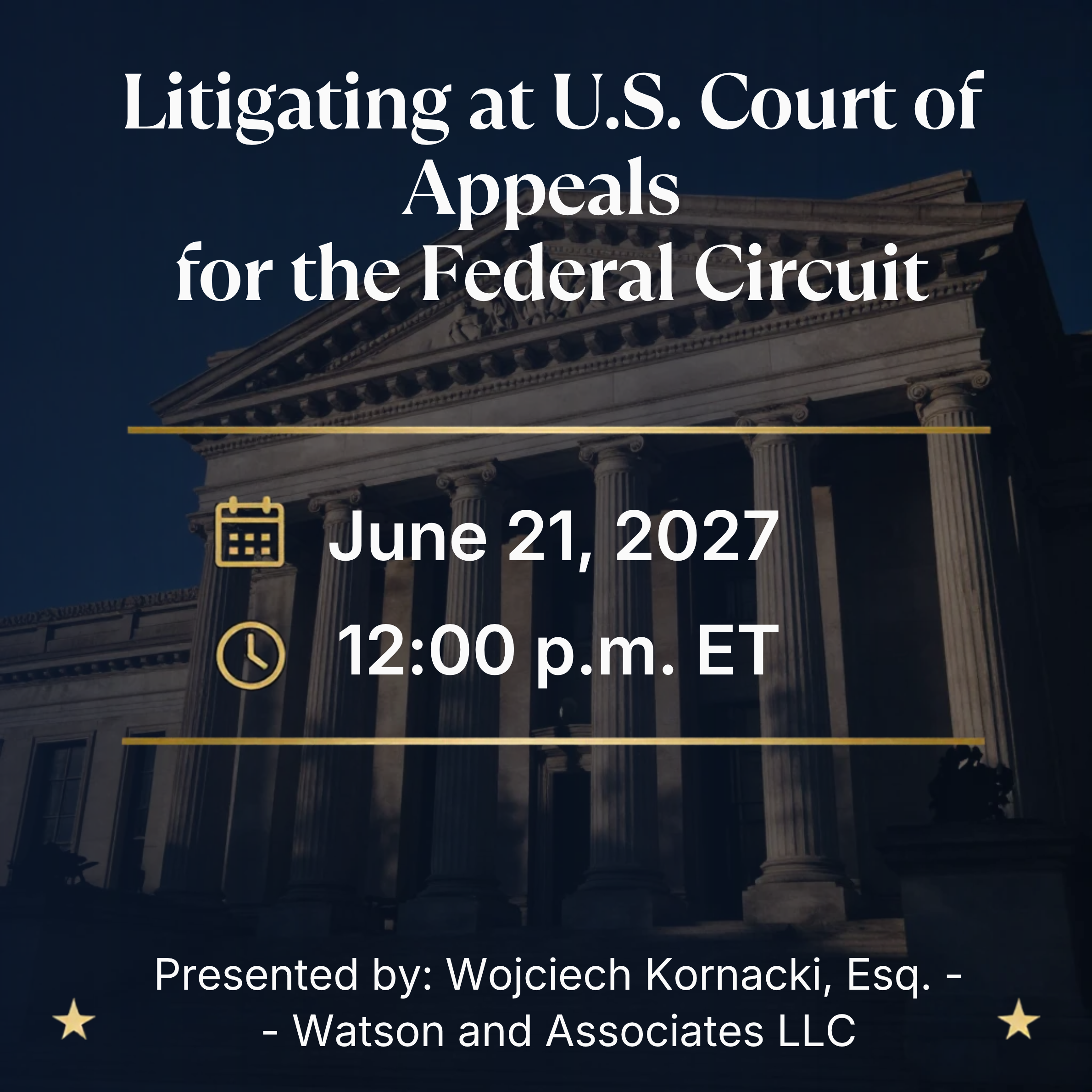
Join us for this presentation to learn about the U.S. Court of Appeals for the Federal Circuit litig...
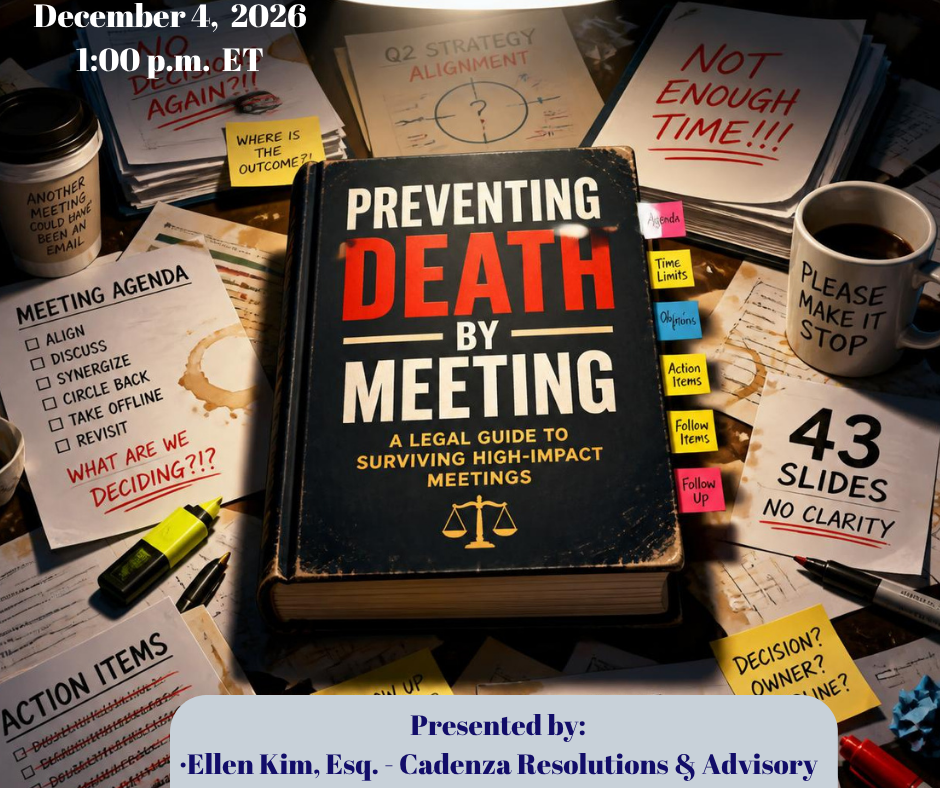
Lawyers lose hundreds of billable and operational hours every year to poorly managed meetings. Unfoc...

Class action litigation continues to expand in both number of filings and monetary exposure, with se...
Adverse and derogatory information often has devastating effects on a contractor's ability to win co...
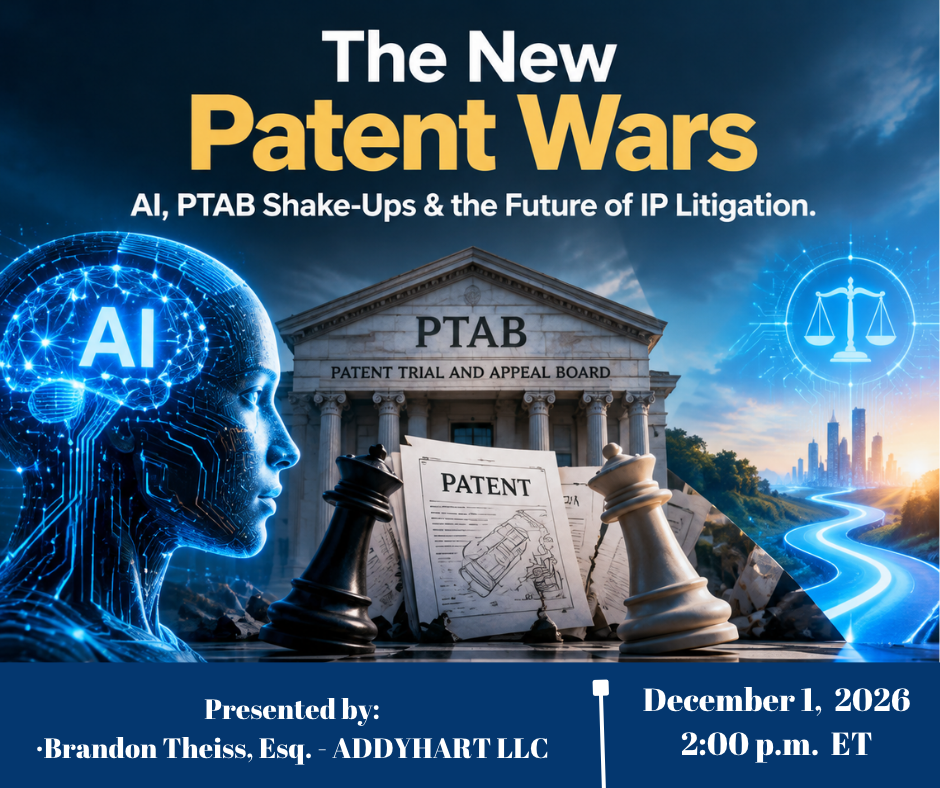
Artificial intelligence is reshaping the strategy and economics of patent litigation, from locating ...
The bar that grand jury targets face in challenging a grand jury subpoena or seeking access to a gra...

During this course you will take a deep dive into federal bid protest litigation at the U.S. Court o...