
Exciting new series on “Voice, Body and Movement for Lawyers – How to connect with the jury and find Justice Through Dramatic Technique!”
Click here to find out more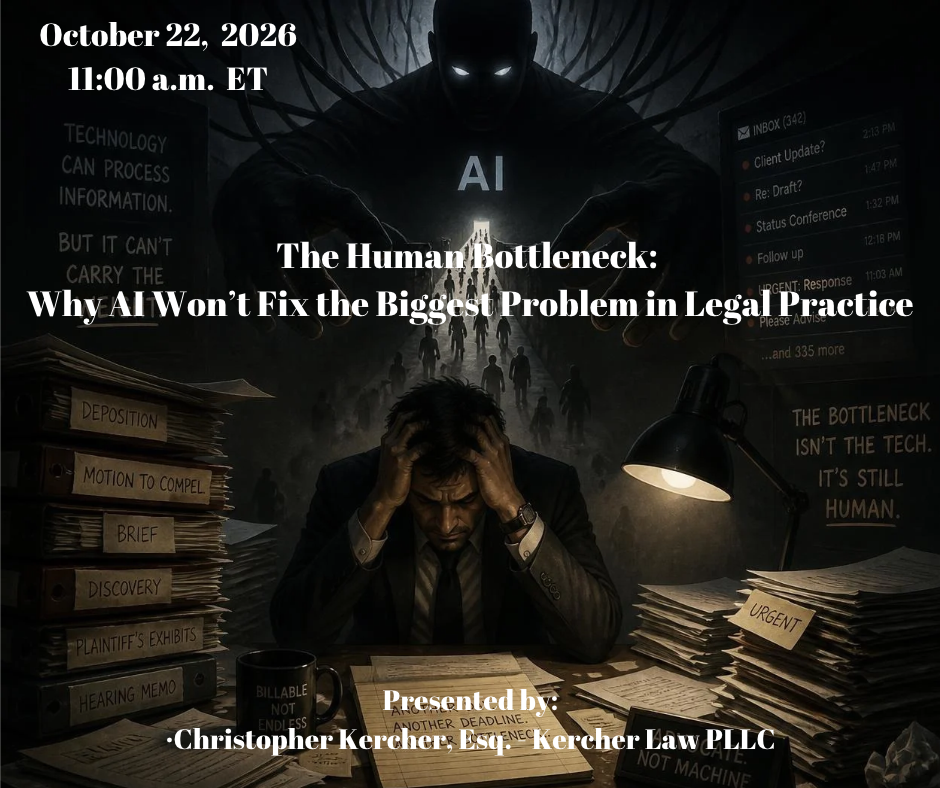
AI tools are advancing faster than legal organizations can absorb them. This program examines why the main constraints on effective legal AI are increasingly human and organizational, including workflow design, delegation, supervision, incentives, and judgment. Attorneys will learn how to identify legal tasks suited to AI assistance, preserve appropriate human oversight, diagnose the bottlenecks that keep AI from improving speed and quality, and redesign legal workflows so lawyers and AI systems complement one another.

Objections are among the most powerful — and most misunderstood — tools in a trial lawye...
"Artificial Intelligence and the Practice of Law" (updated through 2026), is a 50-slide primer desig...

During this course, you will learn about best practices and strategies for retaining intellectual pr...
Every trial lawyer has experienced it: the inner critic before opening statements, the surge of ange...

This course on trade secrets litigation provides real-world best practices through all key stages of...

As the largest purchaser of goods and services in the world, the United States Government requires f...

New York City’s new Non-Primary Residence Property Surcharge—commonly known as the pied-...
The Twelfth Juror: Lessons on Jury Selection from a Trial Lawyer’s Novel and a Trial Consultan...
Modern mediation increasingly brings together parties, counsel, and neutrals across a broad range of...
This presentation provides a basic overview of AI governance in the United States for in-house attor...