
Exciting new series on “Voice, Body and Movement for Lawyers – How to connect with the jury and find Justice Through Dramatic Technique!”
Click here to find out more
This program will explain lawyers’ supervisory duties during and after the client intake process under the Rules of Professional Conduct (“RPC”), with emphasis on RPCs 5.1 and 5.3. The program will also examine the recently issued ABA Opinion 506 addressing the topic of “Responsibilities Regarding Nonlawyer Assistants.” The program will then move to the subject of Office Sharing Arrangements, and will discuss the conflicts of interest issues that can arise under RPC 1.7 and 1.8, and how to address them; the potential vicarious liability and possible fee sharing issues under RPC 1.5; the risk of imputed partnership, and the related issues of advertising and “holding out, under RPC 7, as well as discussing another recently issued ABA Opinion, 507 titled “Office Sharing Arrangements with Other Lawyers.”.
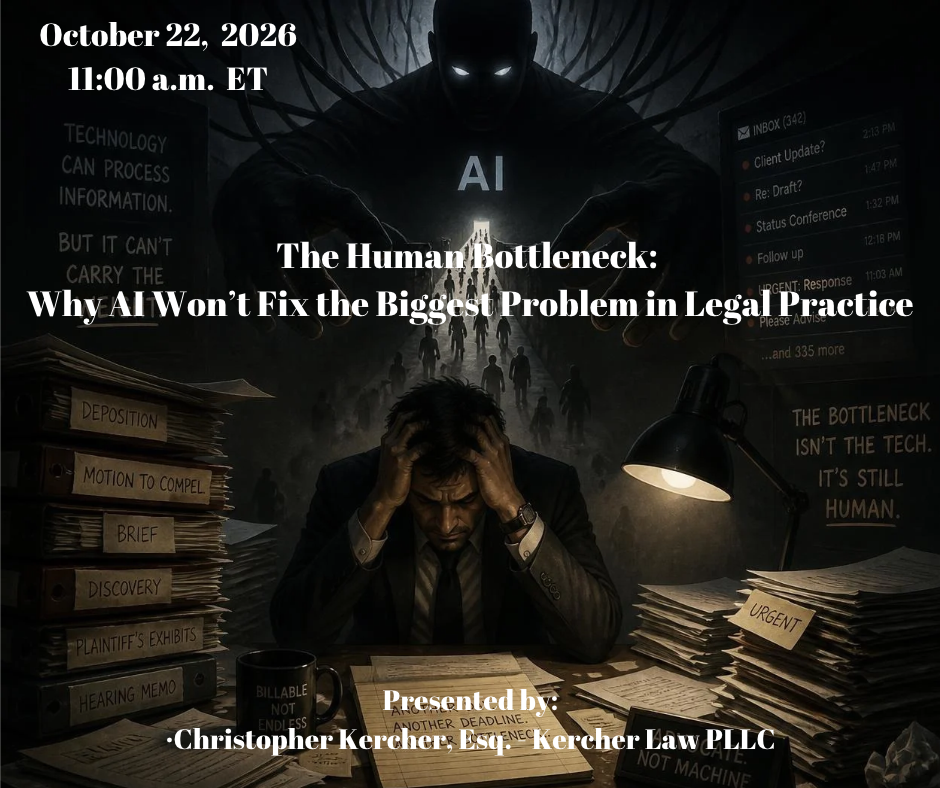
AI tools are advancing faster than legal organizations can absorb them. This program examines why th...

This program provides trial attorneys with a thorough grounding in the three principal currency repo...

As the largest purchaser of goods and services in the world, the United States Government requires f...

This course on trade secrets litigation provides real-world best practices through all key stages of...
Class action waivers in arbitration agreements remain enforceable, but a decade of U.S. Supreme Cour...

Class action litigation presents significant legal and business challenges for employers and corpora...
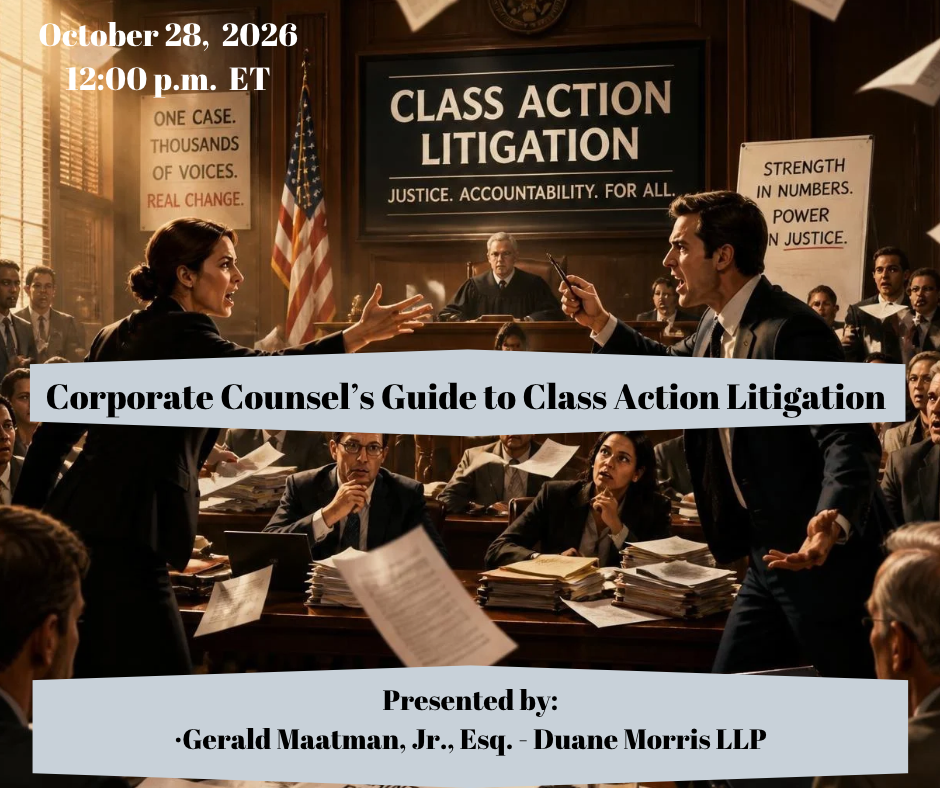
Class action litigation continues to expand in both number of filings and monetary exposure, with se...
If there is one word we continue to hear more than any other term as we continue to navigate through...

Adverse and derogatory information often has devastating effects on a contractor's ability to win co...
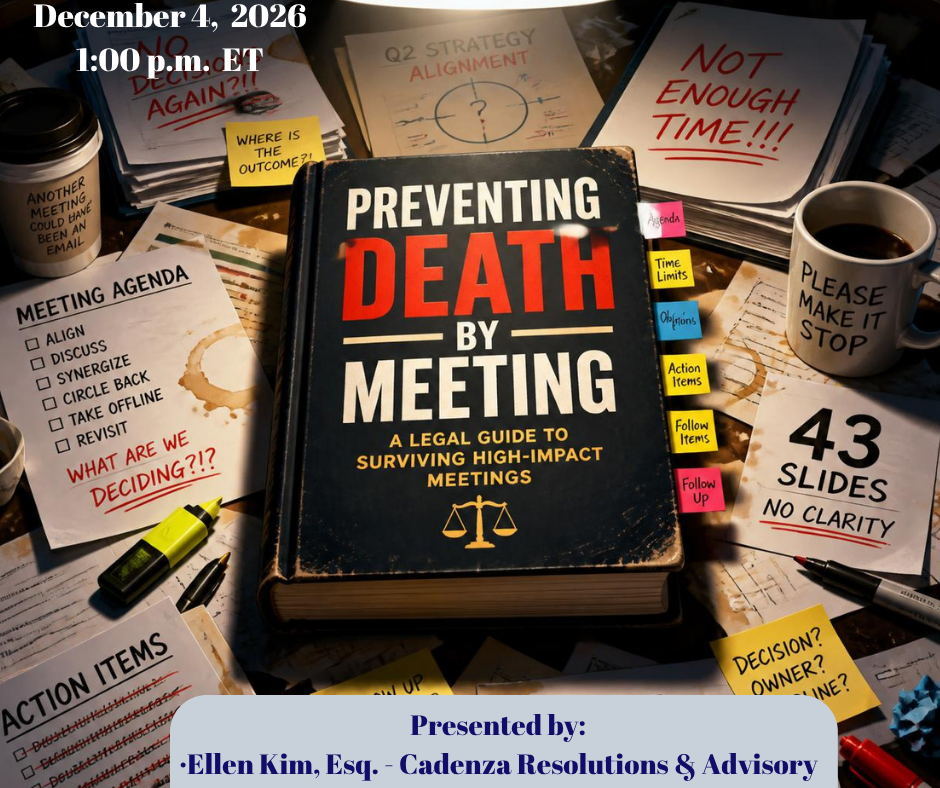
Lawyers lose hundreds of billable and operational hours every year to poorly managed meetings. Unfoc...