
Exciting new series on “Voice, Body and Movement for Lawyers – How to connect with the jury and find Justice Through Dramatic Technique!”
Click here to find out more
Multi-level marketing (“MLM”) companies are similar in structure to pyramid schemes, but with the essential difference that an MLM is considered a legitimate business enterprise and pyramid scheme is a scheme to defraud. Pyramid schemes also have many similarities to Ponzi schemes. Definitions and red flags from government agencies of both MLMs and pyramid schemes will provide a better understanding of the differences. Understanding the difference is paramount to participants and investors. Direct sales to consumers through MLMs is common place in the U.S. and many homes have products sold by MLMs.
This presentation will provide examples of MLMs and pyramid schemes, investigations by regulatory and other government entities, and enforcement actions against MLMs and pyramid schemes and those who run them.

As the largest purchaser of goods and services in the world, the United States Government requires f...

I was wrongfully separated from the military and I will get no military pay and disability retiremen...

This program provides a practical roadmap to mastering every stage of the discovery process in civil...

Perfectionism is often rewarded in the legal profession. It drives attention to detail, thorough pre...

During this course you will take a deep dive into federal bid protest litigation at the U.S. Court o...

During this course, you will learn about best practices and strategies for retaining intellectual pr...

Turn decades of client relationships into lasting equity. This practical CLE shows attorneys how to ...

Adverse and derogatory information often has devastating effects on a contractor's ability to win co...
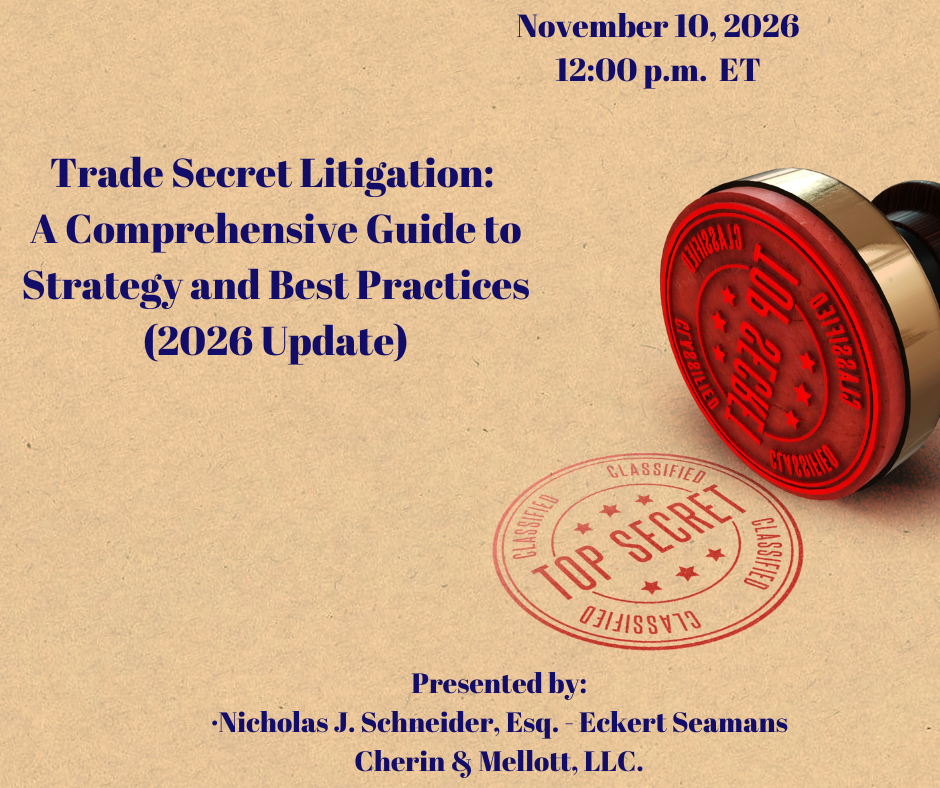
This course on trade secrets litigation provides real-world best practices through all key stages of...

This program provides trial attorneys with a thorough grounding in the three principal currency repo...