
Exciting new series on “Voice, Body and Movement for Lawyers – How to connect with the jury and find Justice Through Dramatic Technique!”
Click here to find out more
You’ve arranged to speak with a reporter. Do you know how to deliver insights that are memorable? Do you know the boundaries of what you can say to advocate for your client, without going beyond what is permitted when engaging in extrajudicial communications? Review the relevant Rules of Professional Conduct with an eye on keeping your remarks ethically sound. Learn how to respond to questions with quotable answers that get your points across. **Ethical Considerations *RPC 1.6 Rule of Confidentiality of Information *RPC 3.6 Rule on Extrajudicial Statements *RPC 3.6(a) Trial Publicity *RPC 3.6(c) Trial Publicity: Limits Do Not Apply *RPC 3.6(d) Trial Publicity: *RPC 3.8 (f) Prosecutors *ABA Model Rule 8.4(c) Conduct involving Dishonesty, Fraud, Deceit or Misrepresentation *ABA Model Rule 8.4(d) Conduct that is prejudicial to the administration of justice *FRCP 11 Prohibits filing a pleading for any improper purpose
Review the basic software concepts and effective uses of generative AI, prompting strategies, and me...
In “Choosing the Right Business Entity,” I will walk through the issues that matter most...
Resilience in the Workplace, delves into the critical importance of resilience in navigating the cha...
Disasters, whether natural or manmade, happen. Disasters can impact the practice of law and, among o...
This Shakespeare?inspired program illustrates how Shakespearean technique can enrich courtroom advoc...
Boundaries and Burnout: The Hidden Crisis in Law is a 60-minute California MCLE Competence Credit pr...

Attorneys will receive a comparative analysis of GAAP and IFRS with emphasis on cross-border legal c...

The landscape of global finance is undergoing a seismic shift as traditional assets migrate to the b...
Part 1 - This program focuses specifically on cross?examining expert witnesses, whose credentials an...
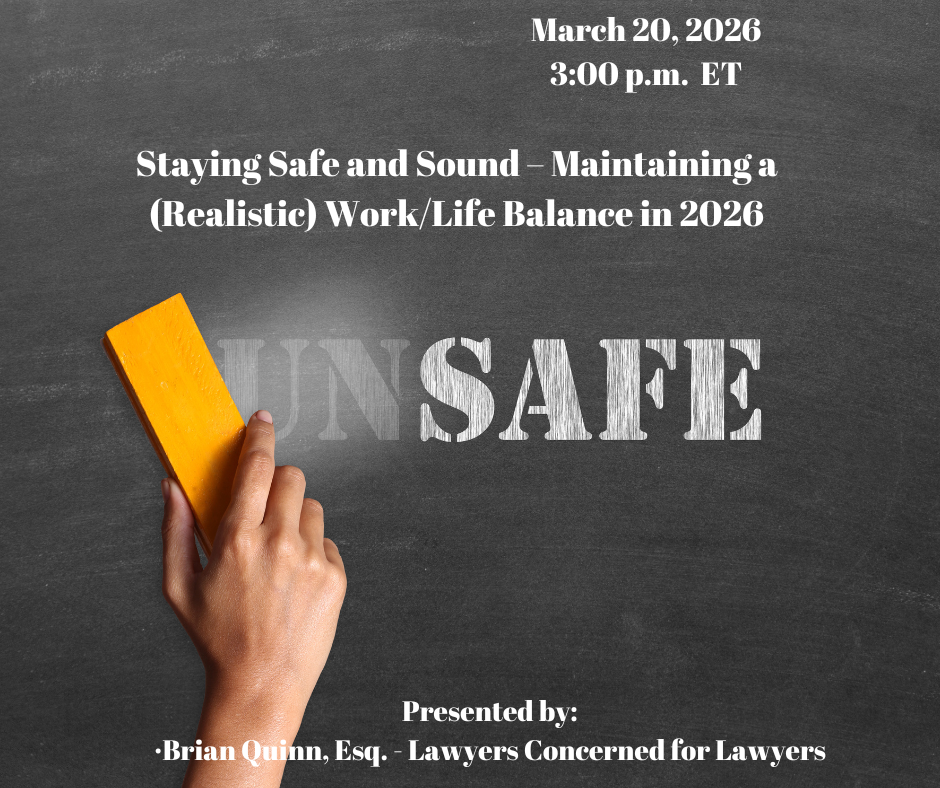
Recent studies have shown that there has been a dramatic increase in impairment due to alcoholism, a...