
Exciting new series on “Voice, Body and Movement for Lawyers – How to connect with the jury and find Justice Through Dramatic Technique!”
Click here to find out more
One of the hottest workplace-related buzz words in 2023 was “RIF” (reduction in force). With an uncertain economic climate, many businesses have been forced to consider and implement business reorganizations resulting in the termination of large groups of employees. US employment laws with respect to RIFs are nuanced, however, and can result in potentially significant liability if not fully adhered to.
In this program, therefore, our presenter will discuss the key US employment laws to consider when assessing a RIF (including the WARN Act and the Older Workers Benefit Protection Act) as well as compliance tips and best practices.
Data privacy remains one of the most rapid areas of growth in the class action space. Plaintiffs con...
During this course you will take a deep dive into federal bid protest litigation at the U.S. Court o...
Confidentiality Agreements (also called NDAs) are too often treated as routine. So routine, th...
This program provides trial attorneys with a thorough grounding in the three principal currency repo...
Adverse and derogatory information often has devastating effects on a contractor's ability to win co...

This course is meant for lawyers of all levels and areas of practice, and in it, we will explore way...
As the largest purchaser of goods and services in the world, the United States Government requires f...
Class action litigation continues to expand in both number of filings and monetary exposure, with se...
This seminar concerns a scope, jurisdiction, and exceptions to the Federal Arbitration Act. The Act ...
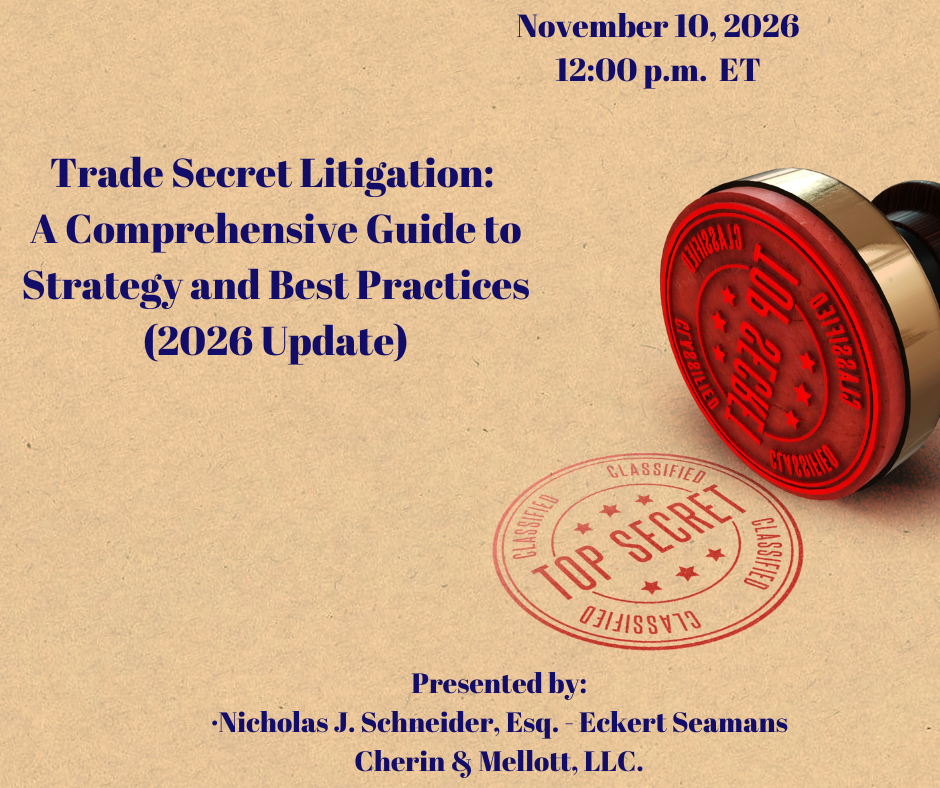
This course on trade secrets litigation provides real-world best practices through all key stages of...