
Exciting new series on “Voice, Body and Movement for Lawyers – How to connect with the jury and find Justice Through Dramatic Technique!”
Click here to find out more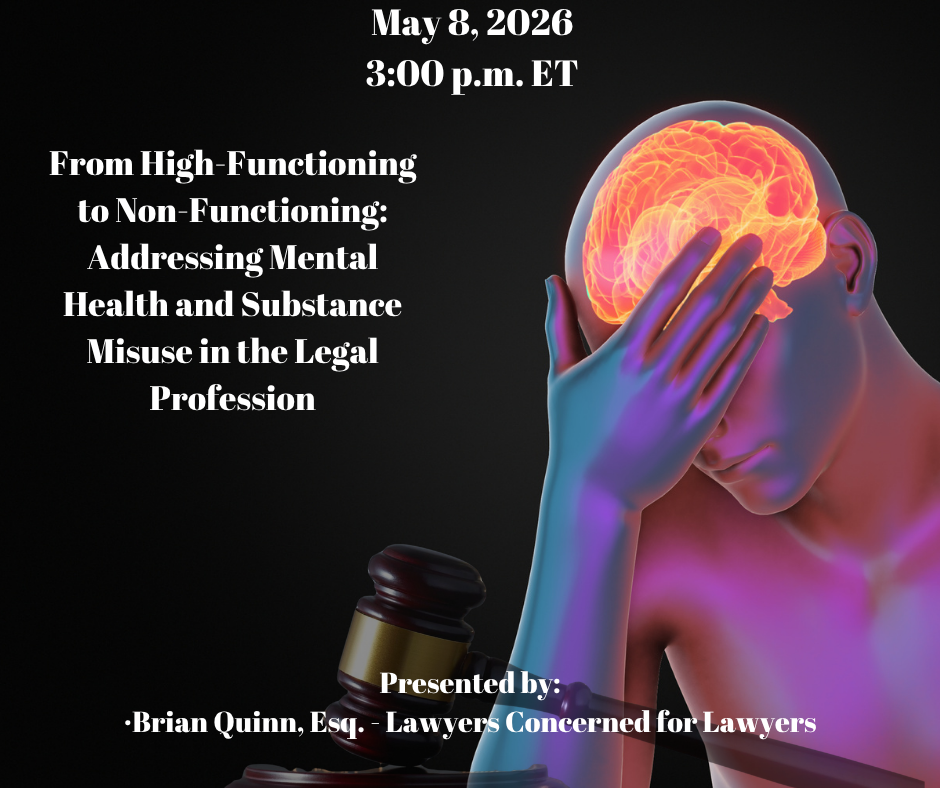
While the term “High-Functioning” isn’t an official medical term or diagnosis, most of us are familiar with what it implies. The continuing ability to perform at a high level can be a barrier to seeking treatment for mental health and substance use disorders. The legal profession is not immune, and in fact may be particularly susceptible to these cycles.
Recent studies have shown that there has been a dramatic increase in impairment due to alcoholism, addiction and mental health disorders among members of the legal profession. The statistics are compelling and clearly indicate that 1 out of 3 attorneys will likely have a need for substance use or mental health services at some point in their careers.
This program will explore:

In an era of heightening geopolitical tension, the protection of sensitive personal data has moved f...

This program provides attorneys with a practical and ethical framework for understanding and respons...

Many solo and small law firms assume AI governance is something only large firms need. It is not. AI...

Part 1 - This program focuses specifically on cross?examining expert witnesses, whose credentials an...
This program will address the ethical obligations of Lawyer Advocates representing clients in arbitr...

This program reframes domestic violence through the lens of “intimate terrorism,” equipp...

This program examines critical 2025-2026 developments in patent eligibility for software and AI inve...
In the rapidly evolving landscape of employment law, arbitration agreements have become a cornerston...
The “Chaptering Your Cross” program explains how dividing a cross?examination into clear...

AI, an innovative technology that was once a supporting act for digital transformation, business str...