
Exciting new series on “Voice, Body and Movement for Lawyers – How to connect with the jury and find Justice Through Dramatic Technique!”
Click here to find out more
A strong fraud program is essential for protecting financial institutions and their customers from evolving threats. This session guides participants through the core components of building an effective fraud program, including how to design the framework, implement monitoring tools, and keep the program current as risks change.
Whether starting from scratch or enhancing an existing program, attendees will learn how to align fraud management with regulatory expectations, internal policies, and industry best practices. This session is ideal for compliance, risk, and fraud teams at banks, fintechs, and money service businesses.
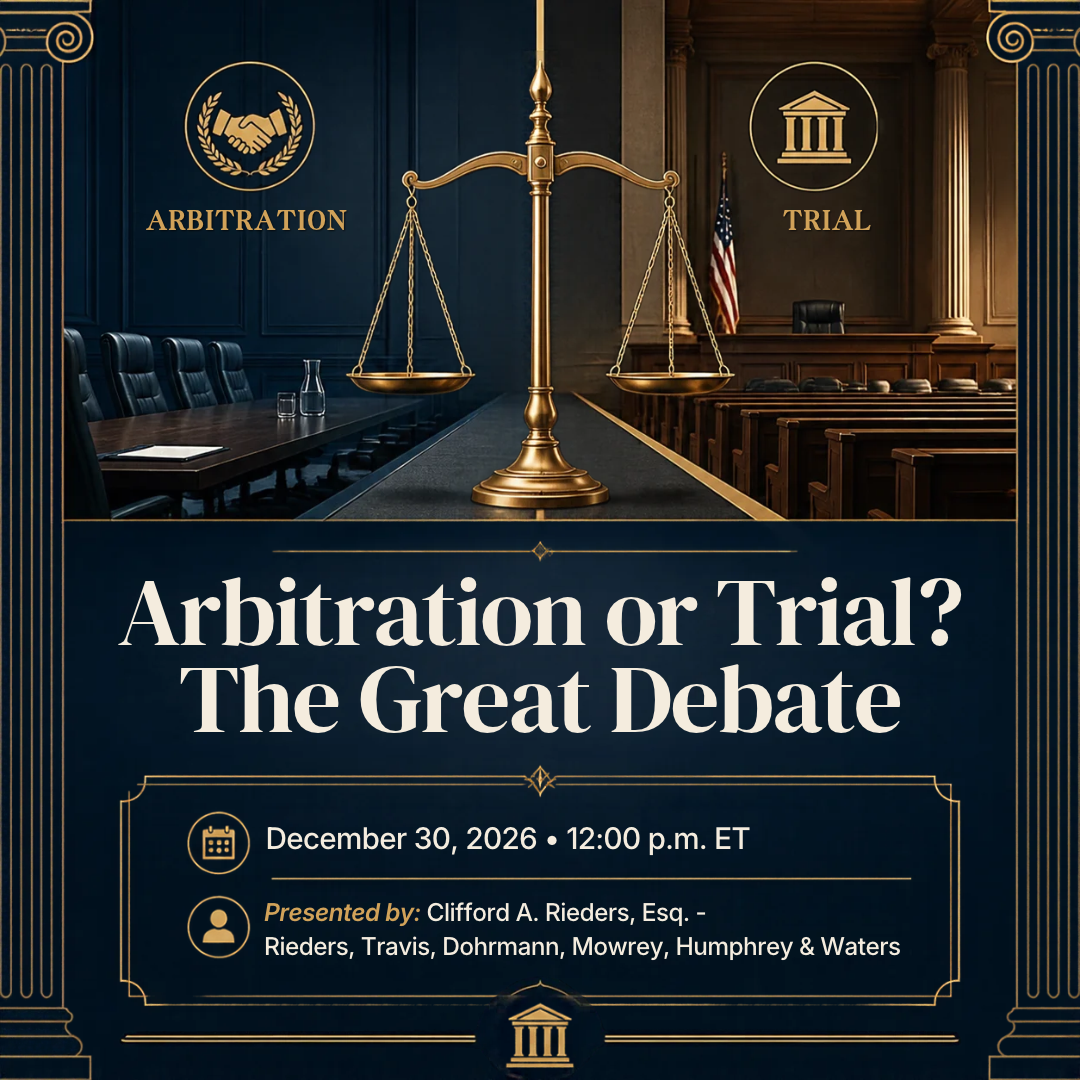
This seminar concerns a scope, jurisdiction, and exceptions to the Federal Arbitration Act. The Act ...

Class action litigation presents significant legal and business challenges for employers and corpora...

Lawyers lose hundreds of billable and operational hours every year to poorly managed meetings. Unfoc...
Adverse and derogatory information often has devastating effects on a contractor's ability to win co...
This program provides a practical roadmap to mastering every stage of the discovery process in civil...

Perfectionism is often rewarded in the legal profession. It drives attention to detail, thorough pre...
Class action waivers in arbitration agreements remain enforceable, but a decade of U.S. Supreme Cour...
Data privacy remains one of the most rapid areas of growth in the class action space. Plaintiffs con...
2026 was a very important year when it comes to federal procurement developments, Artificial Intelli...

I was wrongfully separated from the military and I will get no military pay and disability retiremen...