
Exciting new series on “Voice, Body and Movement for Lawyers – How to connect with the jury and find Justice Through Dramatic Technique!”
Click here to find out more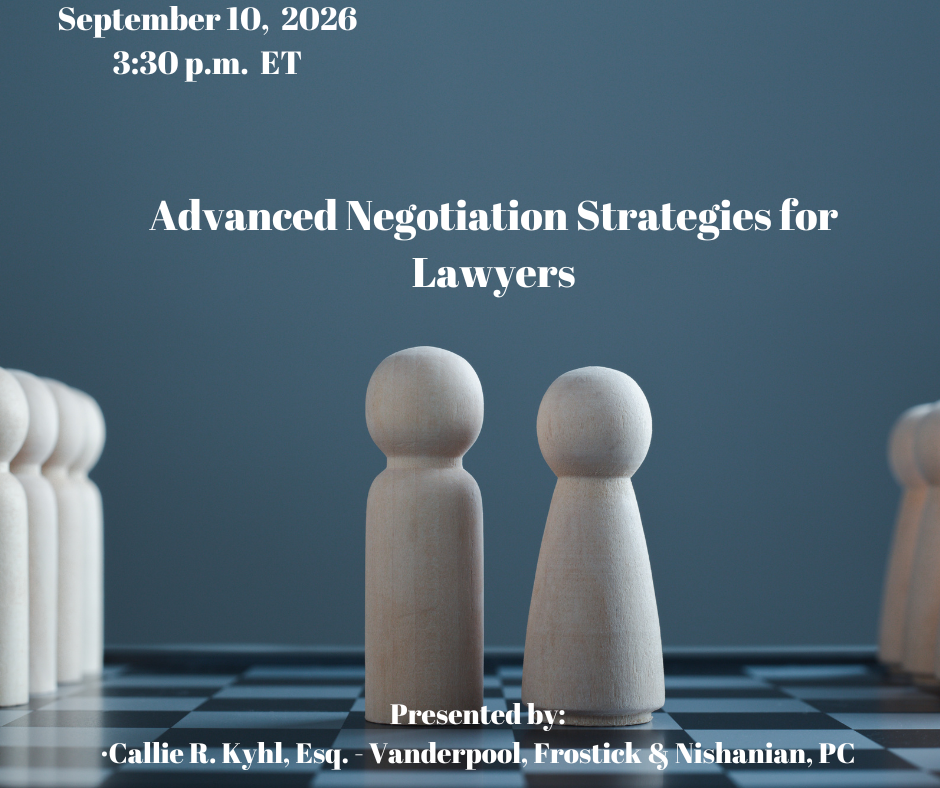
Advanced Negotiation Strategies for Lawyers explores the psychology and strategy behind successful legal negotiations, providing attorneys with practical techniques to achieve better outcomes while maintaining credibility and professionalism.
This program examines how to prepare for negotiations by defining client goals, assessing bargaining styles, developing effective opening offers, and leveraging BATNA and the Zone of Possible Agreement (ZOPA). Participants will learn how cognitive biases—including anchoring, framing, confirmation bias, and loss aversion—shape negotiation dynamics and how to recognize and counter these influences. The course also covers the strategic exchange of information, the timing and use of concessions, and proven persuasion techniques such as reciprocity, social proof, and scarcity. Through a practical and proven approach, attendees will gain actionable tools to negotiate more effectively, protect client interests, build productive relationships with opposing counsel, and maximize opportunities for favorable resolutions.
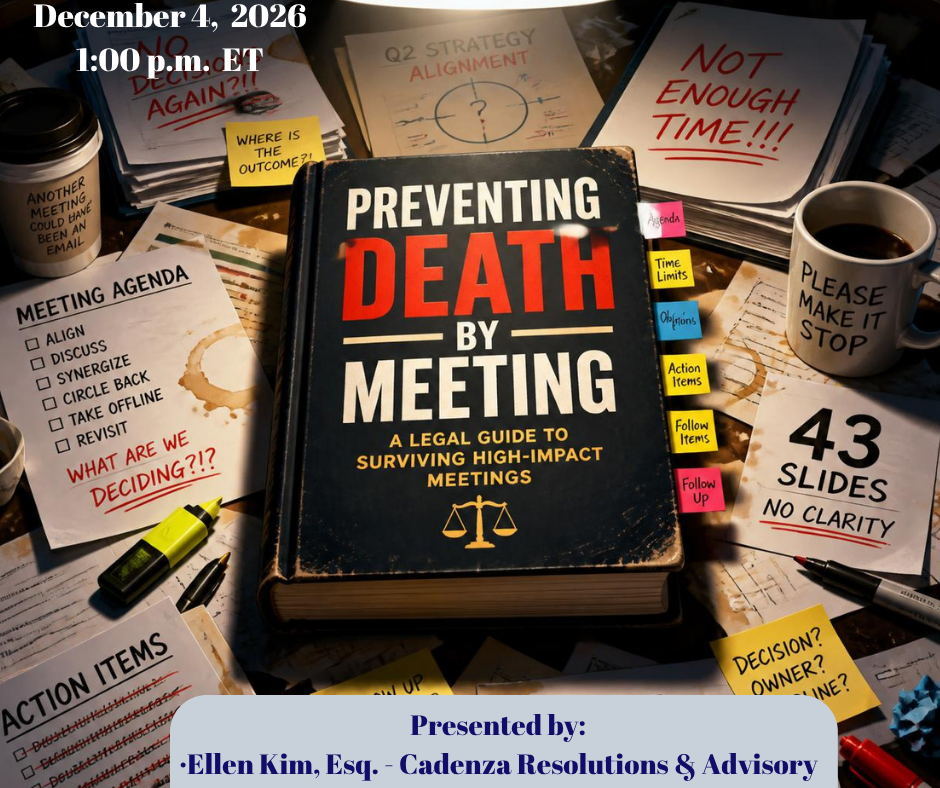
Lawyers lose hundreds of billable and operational hours every year to poorly managed meetings. Unfoc...
Trial Starts Now: Winning the Final Six Months provides a comprehensive guide to the critical tasks ...
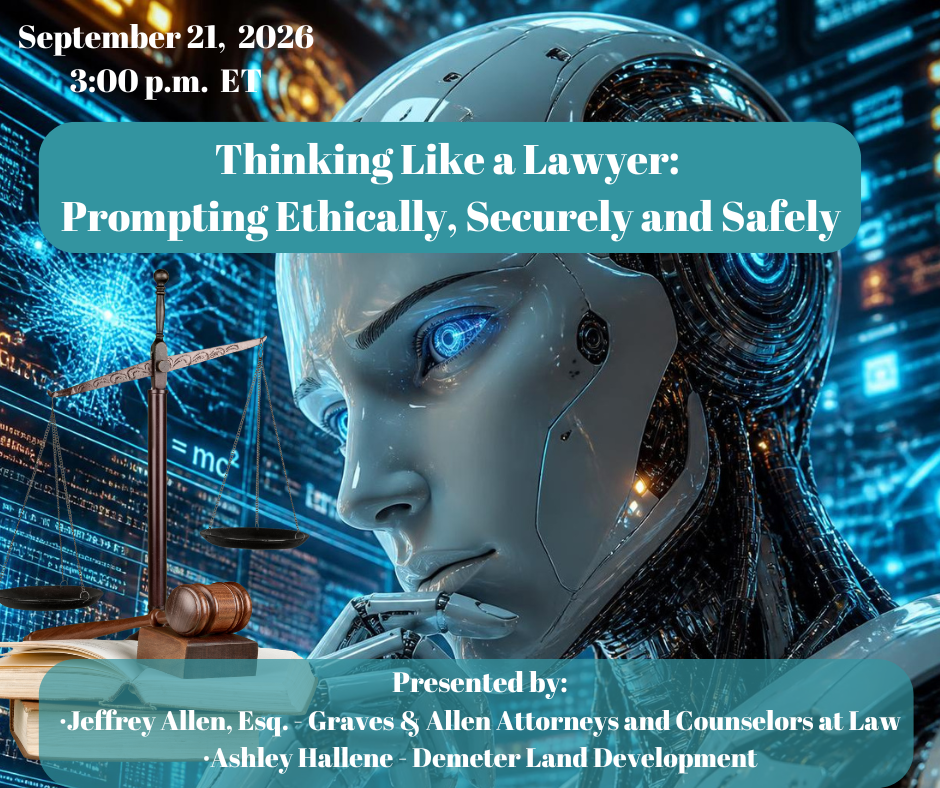
Thinking Like a Lawyer, Prompting Like a Pro: Prompting Ethically, Securely, and Safely explores how...

Perfectionism is often rewarded in the legal profession. It drives attention to detail, thorough pre...
This program provides a practical roadmap to mastering every stage of the discovery process in civil...
"Artificial Intelligence and the Practice of Law" (updated through 2026), is a 50-slide primer desig...
This program addresses a gap no standard ethics CLE reaches: the psychology of what happens inside t...
This course examines the latest legal and compliance developments in the artificial intelligence (AI...
Adverse and derogatory information often has devastating effects on a contractor's ability to win co...
Every trial lawyer has experienced it: the inner critic before opening statements, the surge of ange...