
Exciting new series on “Voice, Body and Movement for Lawyers – How to connect with the jury and find Justice Through Dramatic Technique!”
Click here to find out more
Attorneys may offer a crucial role in discussing advance (end of life) care planning options with their clients prior to, during and after estate planning or family law conversations. Advance Directives consists of a Living Will and Durable Power of Attorney for Healthcare and were initially governed by federal law in 1991 through the Patient Self Determination Act and of recent States have enacted their own laws. A Living Will is a health care directive that determines what types of life-sustaining treatments (enteral or parenteral nutrition therapy, hydration, artificially ventilation) your client may elect to receive. A Durable Power of Attorney for Healthcare affords your clients to select a healthcare agent to make decisions should your client lack decision-making (mental) capacity. Other advance directives include the provision for organ and tissue donation and when your client may elect natural death.
This course will guide you through the key provisions for advance directives and resources that are available for you and your clients.
Learning Objectives:
• Discuss the essential provisions and requirements when advising and drafting a Living Will and Durable Power of Attorney for Healthcare for your client.
• Define what the various life-sustaining treatments entail (e.g., dialysis, artificial ventilation, nutritional therapy, hydration, cardiopulmonary resuscitation) and what palliative care measure to consider.
• Provide examples as to how you may approach your client in the preparation of their end of life goals and wishes and how they may capture these wishes and communicate them to their immediate family members.
• Determine where their Advance Directives should be filed so they may be available for healthcare providers to apply.
This program provides a practical roadmap to mastering every stage of the discovery process in civil...
In 1968, English rock band The Zombies released their psychedelic counterculture anthem, “Time...
This course examines the latest legal and compliance developments in the artificial intelligence (AI...

Perfectionism is often rewarded in the legal profession. It drives attention to detail, thorough pre...
Advanced Negotiation Strategies for Lawyers explores the psychology and strategy behind successful l...
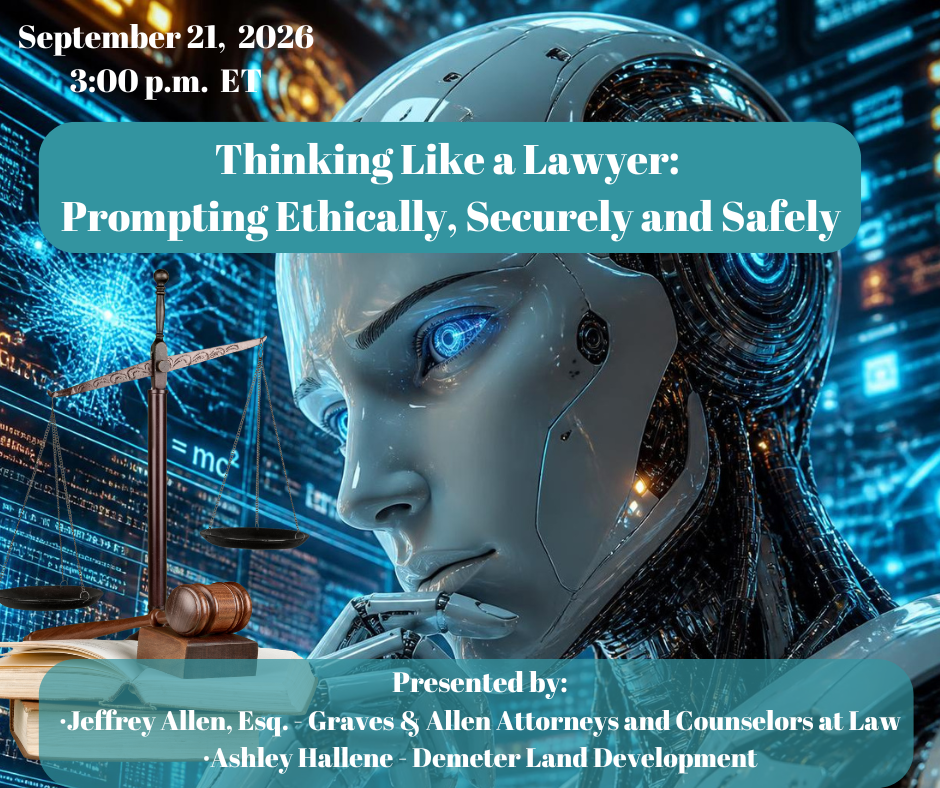
Thinking Like a Lawyer, Prompting Like a Pro: Prompting Ethically, Securely, and Safely explores how...

Adverse and derogatory information often has devastating effects on a contractor's ability to win co...
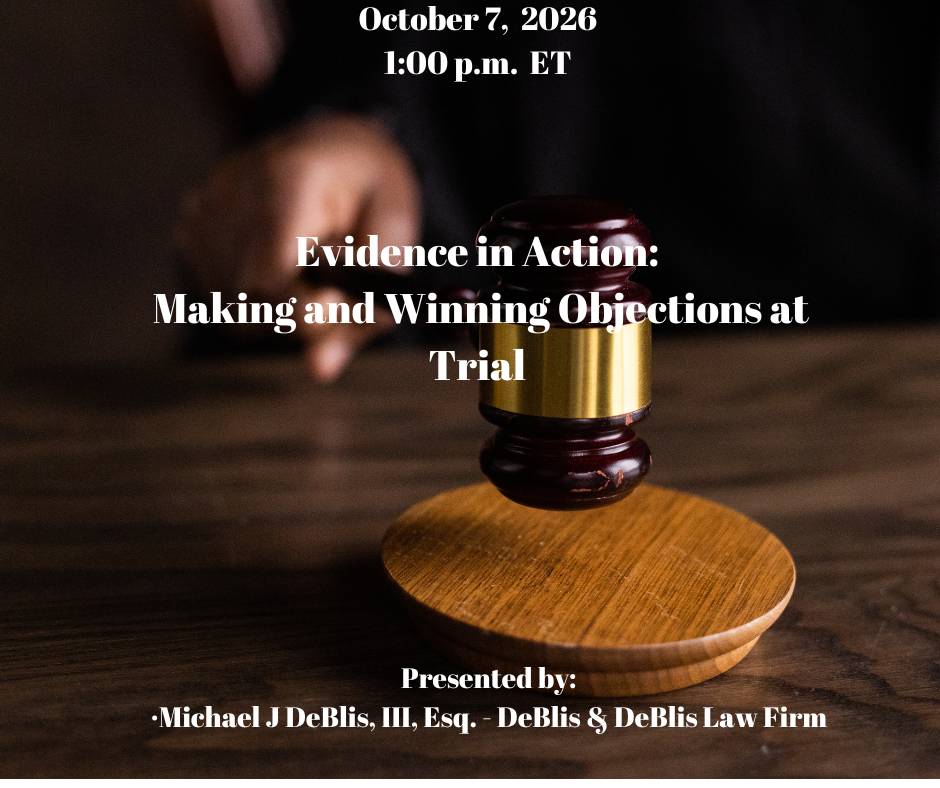
Objections are among the most powerful — and most misunderstood — tools in a trial lawye...
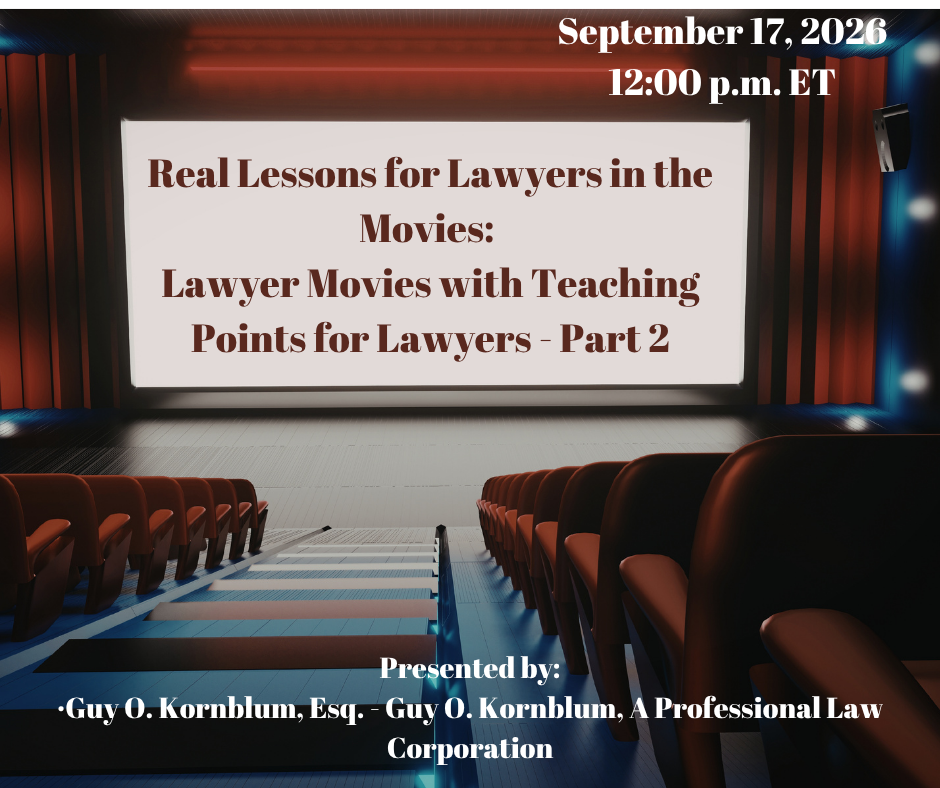
In Part 2, Mr. Kornblum will again use segments from the movies to teach pre-trial and trial tactics...
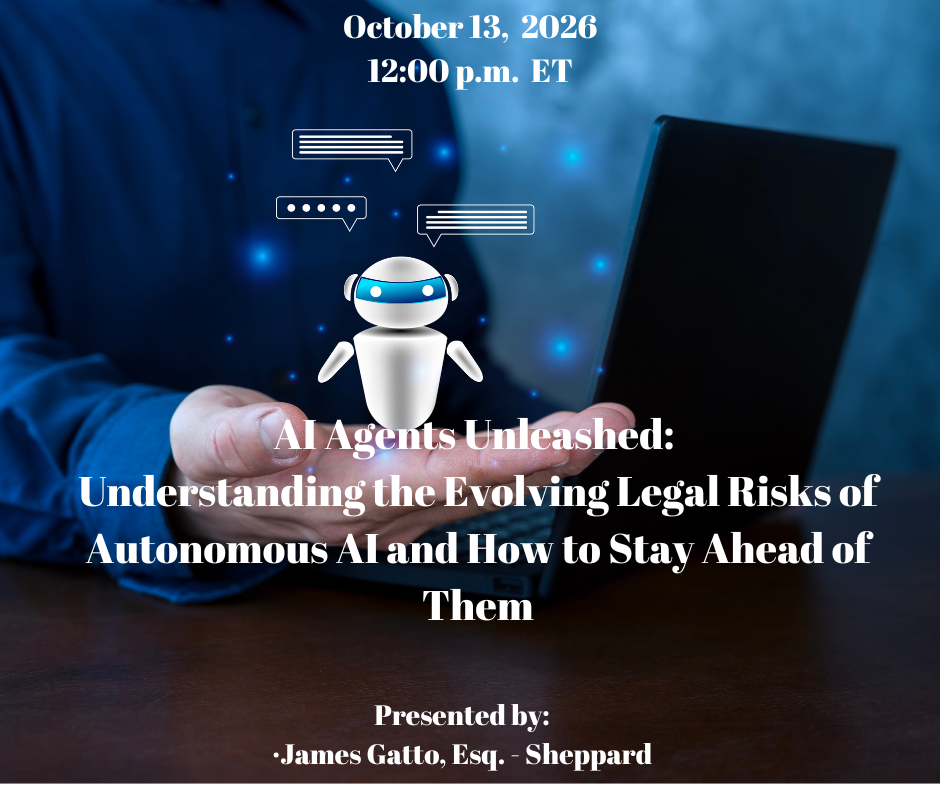
AI agents — autonomous systems capable of planning, deciding, and acting independently across ...