
Exciting new series on “Voice, Body and Movement for Lawyers – How to connect with the jury and find Justice Through Dramatic Technique!”
Click here to find out more
As we move towards what we believe to be a post-pandemic era, the practice of law is very different today than many of us imagined it could be. Before the pandemic, women typically faced greater barriers to partnership and leadership than their male colleagues. Today, as offices reopen, we have a unique opportunity to refocus and reimagine the structures and culture of legal organizations. We are facing such core questions as, how will employer policies affect women, especially women with children, women of color and women from various cultures? Why are so many women lawyers experiencing burnout and what strategies can leaders implement to minimize the impact? What can women do individually and together to enhance retention and advance? Our speakers will present comprehensive research on these issues and will share their insights and experiences.
Business disputes involving closely held companies, partnerships, shareholders, and informal busines...
Confidentiality Agreements (also called NDAs) are too often treated as routine. So routine, th...

The hardest part of managing a diverse workforce is inclusion: the everyday decisions about who gets...

Effective courtroom advocacy requires more than a command of the facts and law; it also demands the ...
Every IP question a client brings starts with two decisions: which regime (patent, trademark, copyri...
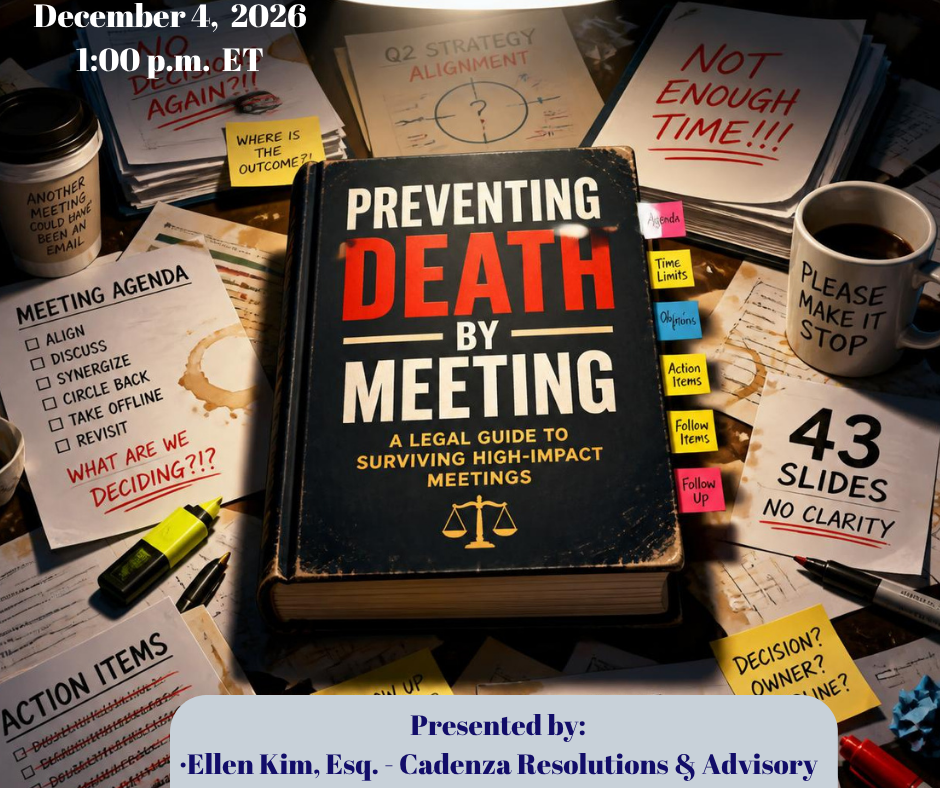
Lawyers lose hundreds of billable and operational hours every year to poorly managed meetings. Unfoc...
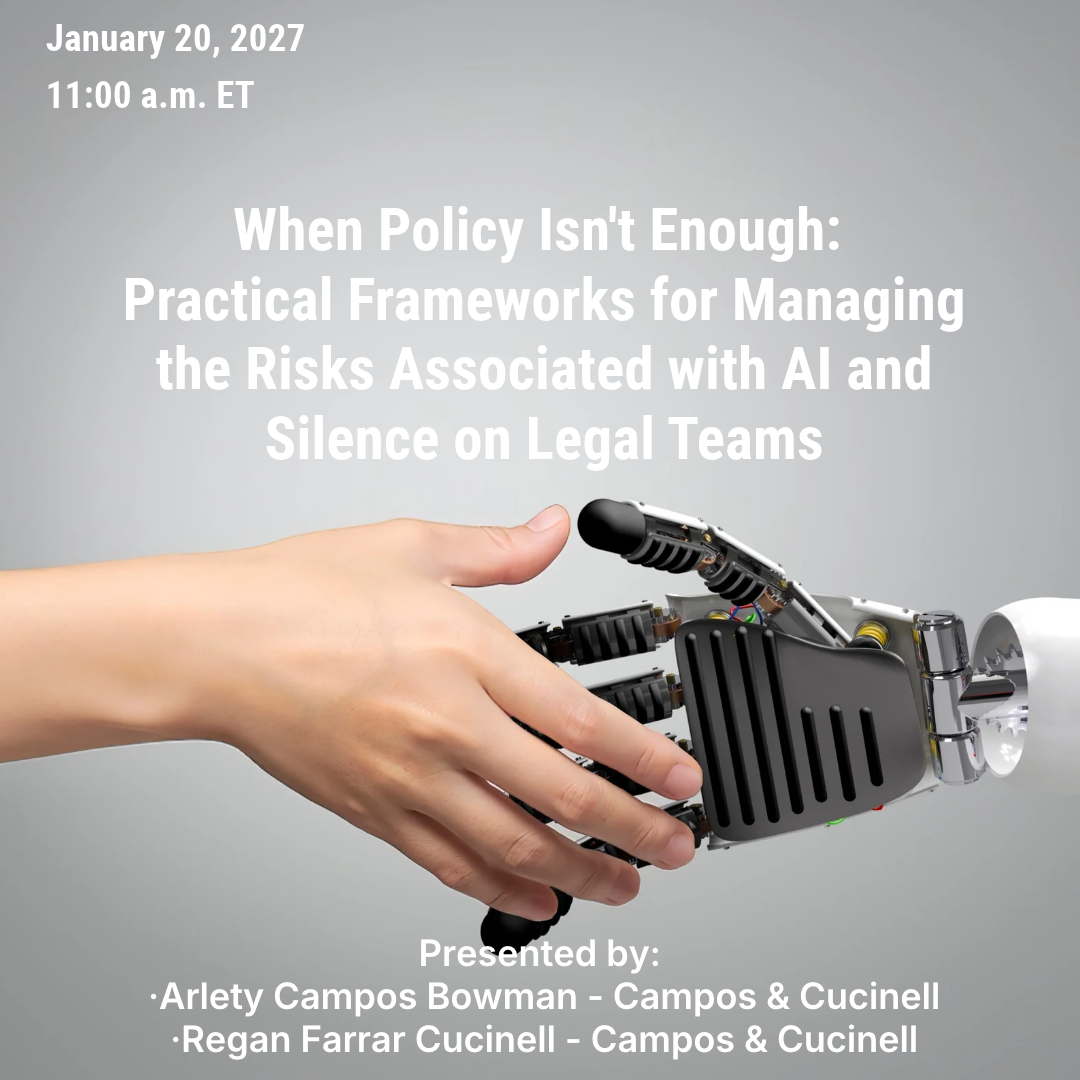
AI tools and workplace silence create the same problem for legal teams: the safeguards in place, inc...
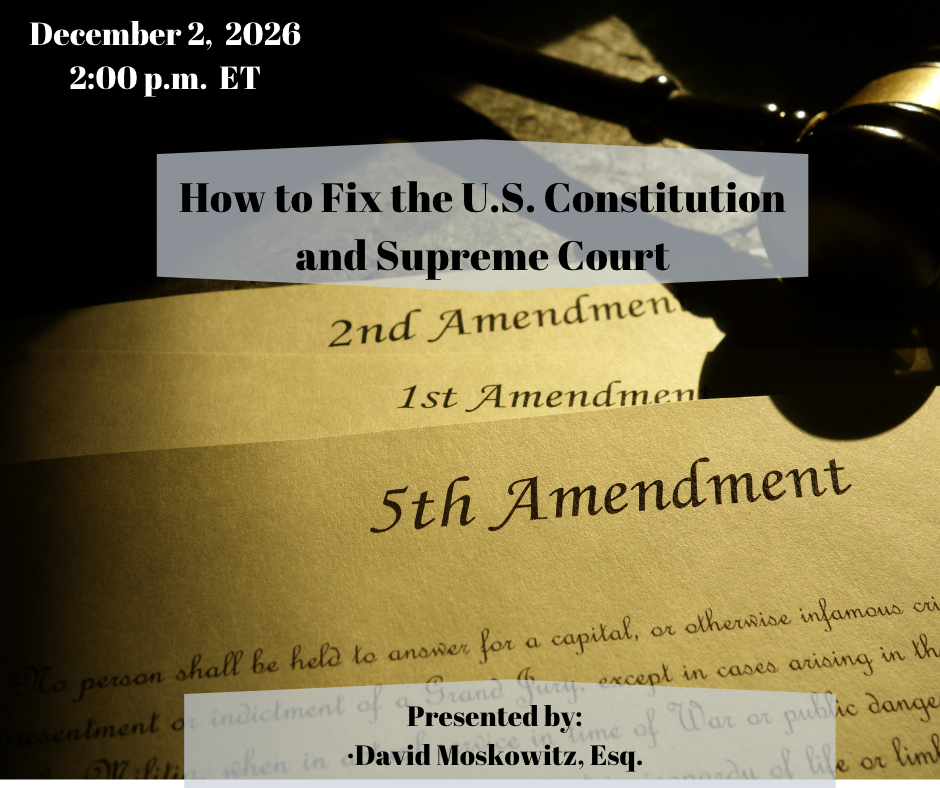
The United States Constitution is one of the most influential legal documents in history, establishi...

The legal industry is in the middle of the largest generational transfer of law firm ownership in it...

Artificial intelligence is reshaping the strategy and economics of patent litigation, from locating ...