
Exciting new series on “Voice, Body and Movement for Lawyers – How to connect with the jury and find Justice Through Dramatic Technique!”
Click here to find out more
Much has been written in recent years about lawyers' duties to preserve the confidentiality of client information under the rules of professional conduct and to take reasonable precautions to strengthen cybersecurity in order to avoid data breaches. Executing those duties has become more difficult amid an increase in the frequency and sophistication of state-sponsored and criminal cyberattacks directed at law firms and their clients. Further complicating matters for lawyers is knowing when disclosure to clients of a law firm data breach is required by the rules of professional conduct even though the threat of exfiltration or loss of client confidential data is in doubt. We will examine American Bar Association opinions that offer some guidance on when client notification of a data breach is appropriate to ensure the protection of client confidentiality and minimize exposure to legal malpractice liability. ABA Ethics Rules to be addressed will be Ethics Opinions 477R and 498 (2021)
In addition, we will discuss the requirements of Bar Associations in various states and analyze law firms' exposure to potential professional liability.
• What should lawyers do when their firm is the victim of a data breach or ransomware attack?
• What obligations do lawyers have to notify their clients that their confidential data has been or may have been compromised or accessed by a hacker?
• Opinions of the American Bar Association and various states offer some guidance on when client notification of a data breach is appropriate to ensure the protection of client confidentiality and minimize exposure to legal malpractice liability.

During this course, you will learn about best practices and strategies for retaining intellectual pr...

The practice of law places legal professionals under extraordinary and often chronic stress, making ...

As the largest purchaser of goods and services in the world, the United States Government requires f...

New York City’s new Non-Primary Residence Property Surcharge—commonly known as the pied-...

Perfectionism is often rewarded in the legal profession. It drives attention to detail, thorough pre...
Adverse and derogatory information often has devastating effects on a contractor's ability to win co...
This course on trade secrets litigation provides real-world best practices through all key stages of...
Lawyers lose hundreds of billable and operational hours every year to poorly managed meetings. Unfoc...
Class action litigation presents significant legal and business challenges for employers and corpora...
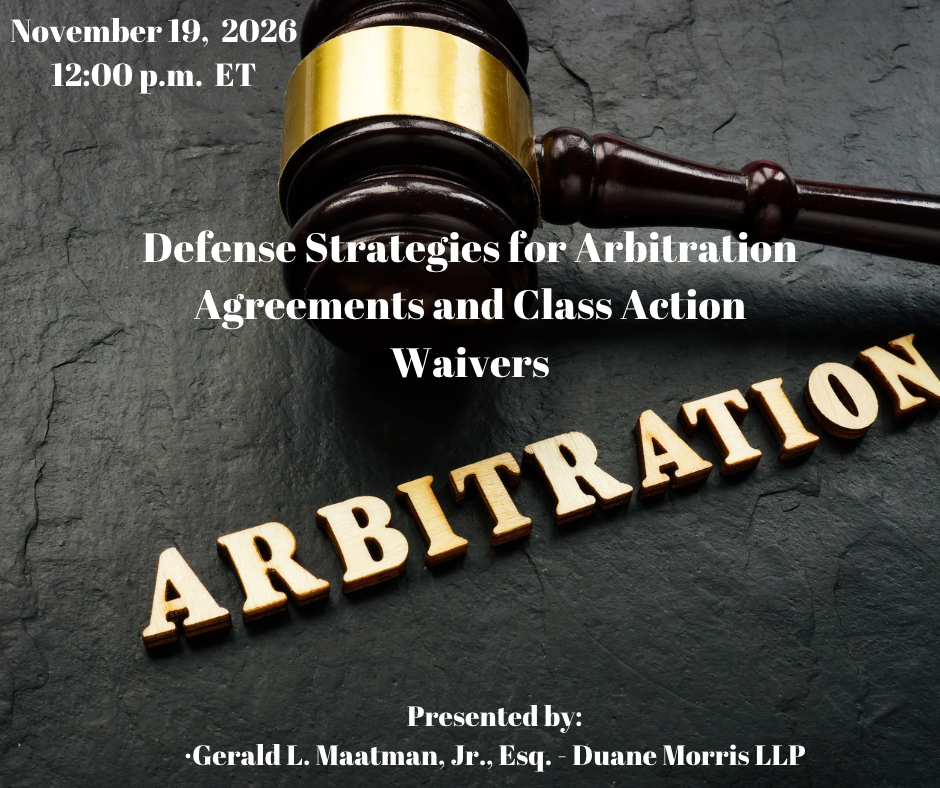
Class action waivers in arbitration agreements remain enforceable, but a decade of U.S. Supreme Cour...