
Exciting new series on “Voice, Body and Movement for Lawyers – How to connect with the jury and find Justice Through Dramatic Technique!”
Click here to find out more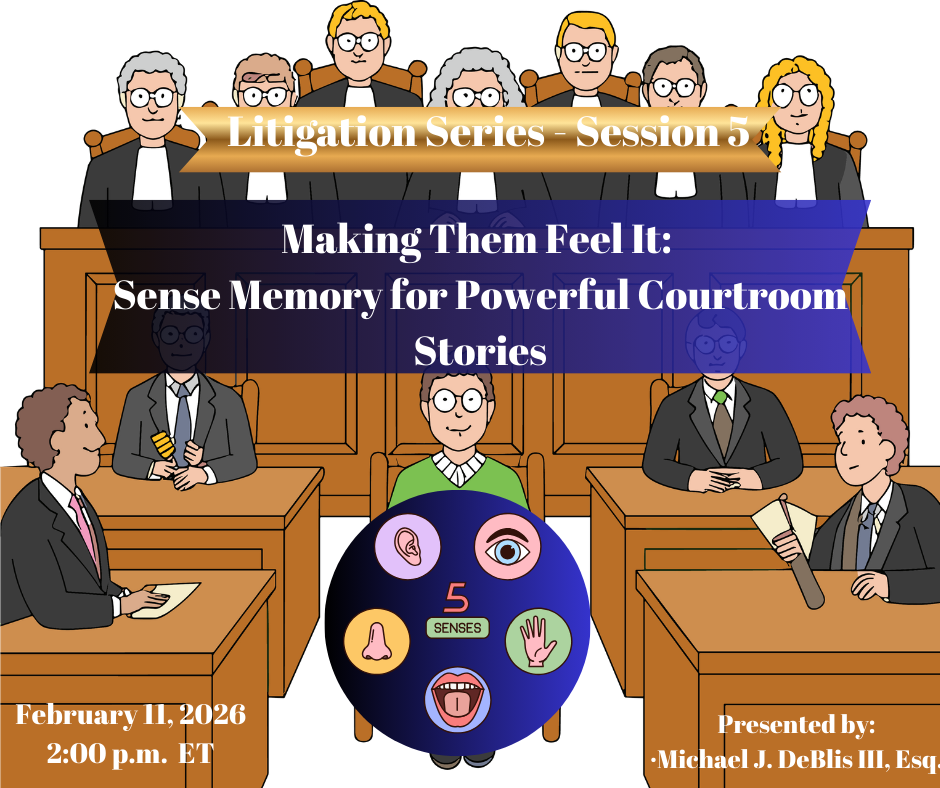
This presentation examines how “sense memory,” a core acting technique, can help lawyers bring greater detail, vividness, and emotional truth to courtroom storytelling. By reconnecting with sensory awareness—sight, sound, touch, taste, and smell—lawyers learn to evoke experiences that feel real rather than abstract.
The program encourages intentional, embodied storytelling, enhancing both the lawyer’s presence and the jury’s ability to visualize and emotionally engage with the narrative.

As the largest purchaser of goods and services in the world, the United States Government requires f...
AI agents — autonomous systems capable of planning, deciding, and acting independently across ...
This course on trade secrets litigation provides real-world best practices through all key stages of...
The Twelfth Juror: Lessons on Jury Selection from a Trial Lawyer’s Novel and a Trial Consultan...

Lawyers lose hundreds of billable and operational hours every year to poorly managed meetings. Unfoc...
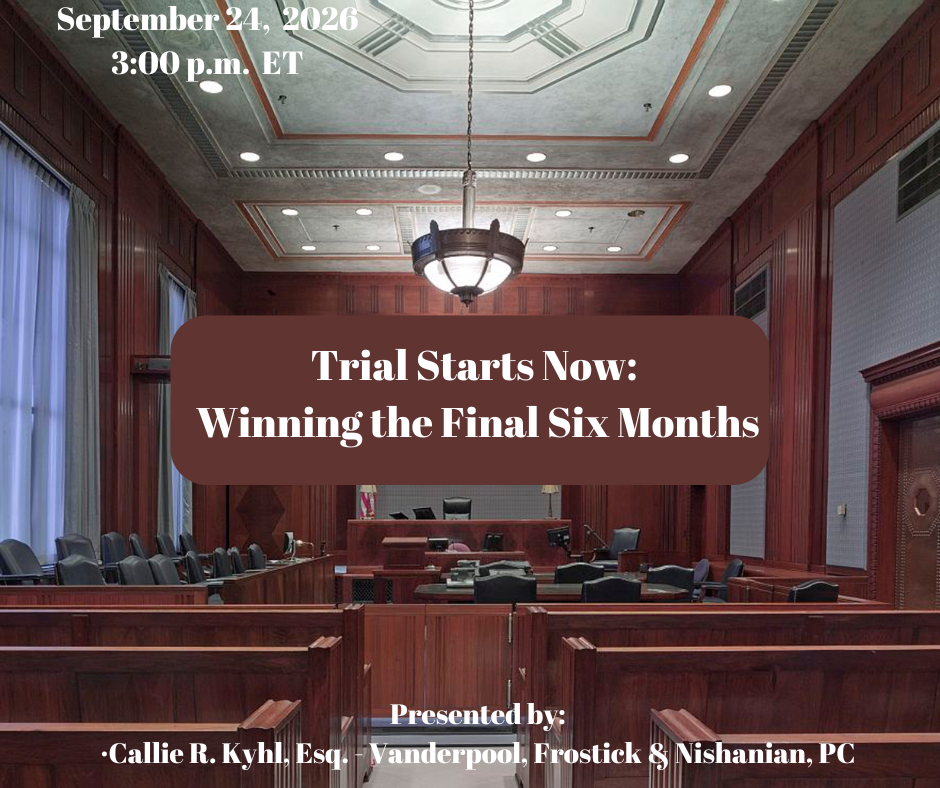
Trial Starts Now: Winning the Final Six Months provides a comprehensive guide to the critical tasks ...

Decentralized Autonomous Organizations (DAOs) and other digital-native structures have moved from ni...
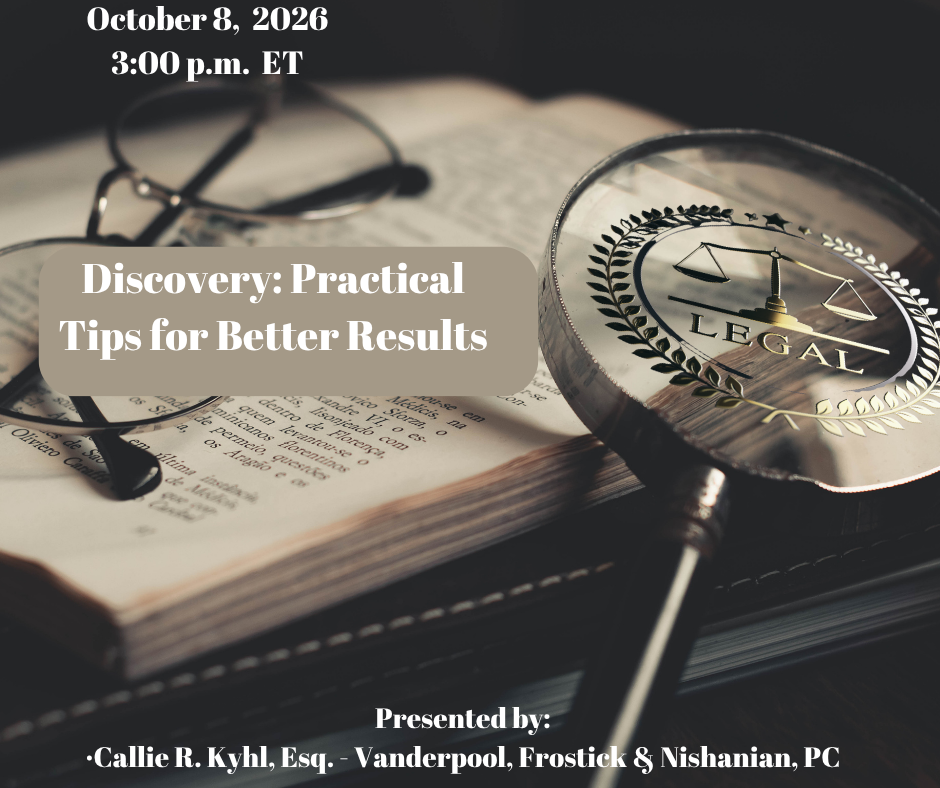
This program provides a practical roadmap to mastering every stage of the discovery process in civil...
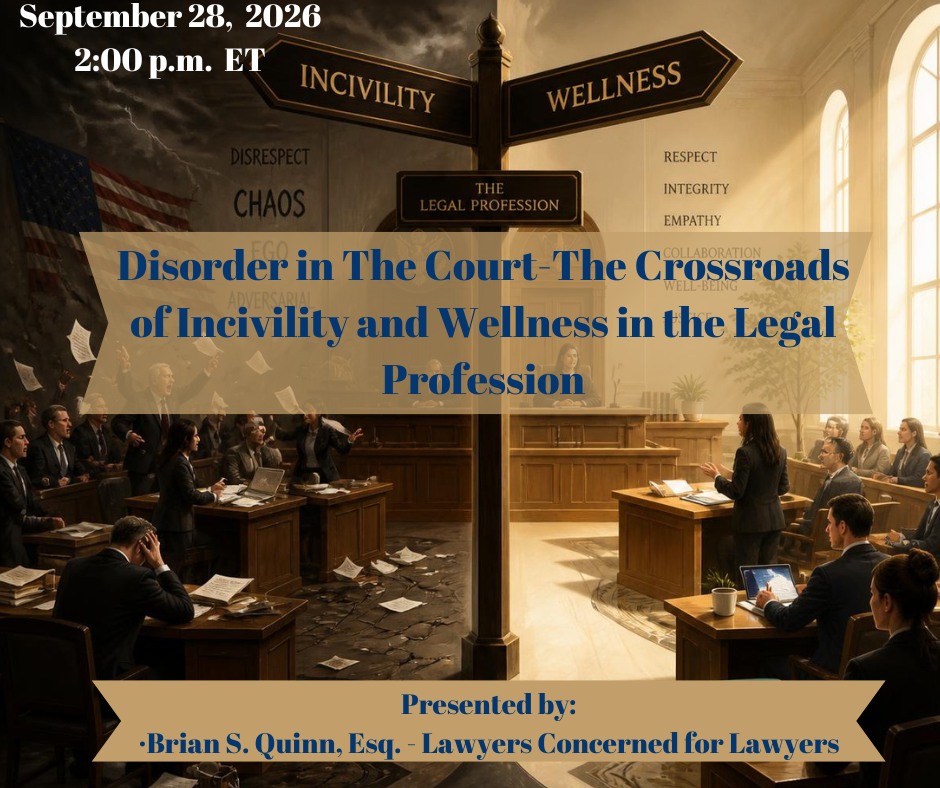
Abrasive or burned out? Overworked or uncivil? Zealous advocate or bully? The legal profession is c...
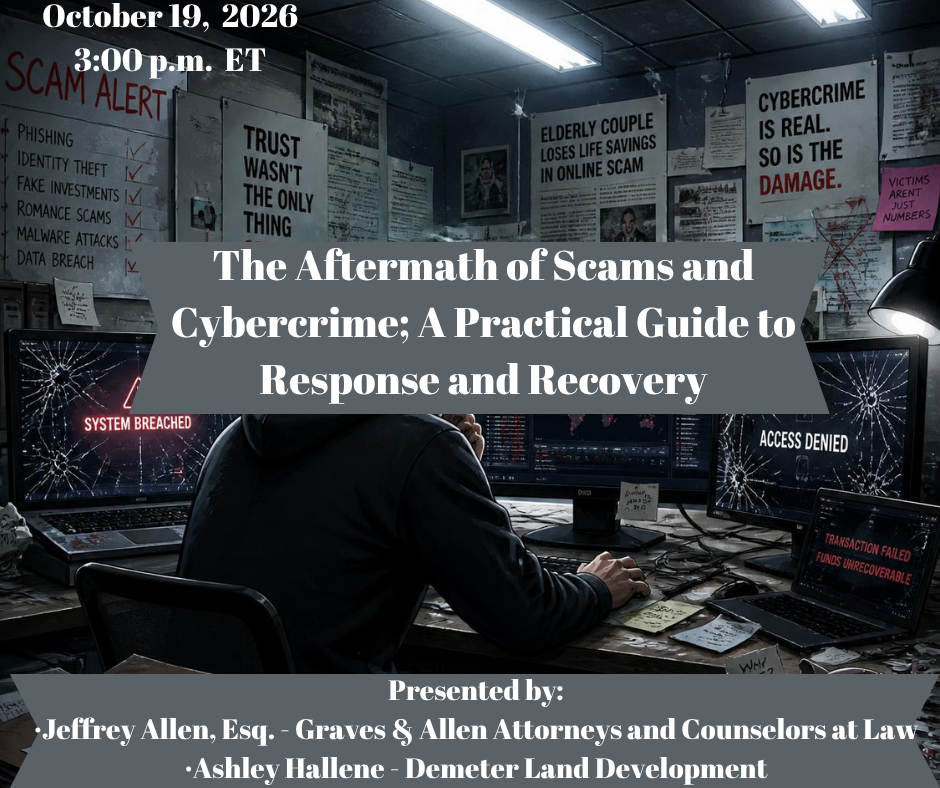
The Aftermath of Scams and Cybercrime: A Practical Guide to Response and Recovery examines the immed...