
Exciting new series on “Voice, Body and Movement for Lawyers – How to connect with the jury and find Justice Through Dramatic Technique!”
Click here to find out more
Are you confident your nonprofit client is fully compliant and well-governed? During this program you will gain critical insights to ensure your client's organization’s success and integrity.
This program covers essential aspects of nonprofit governance, including risk management strategies, financial and internal controls, effective bylaws and operating policies, and conflicts of interest management strategies. Equip your nonprofit clients with the knowledge and tools needed for sound governance and compliance. Don’t miss this opportunity to enhance your nonprofit client’s effectiveness and accountability.
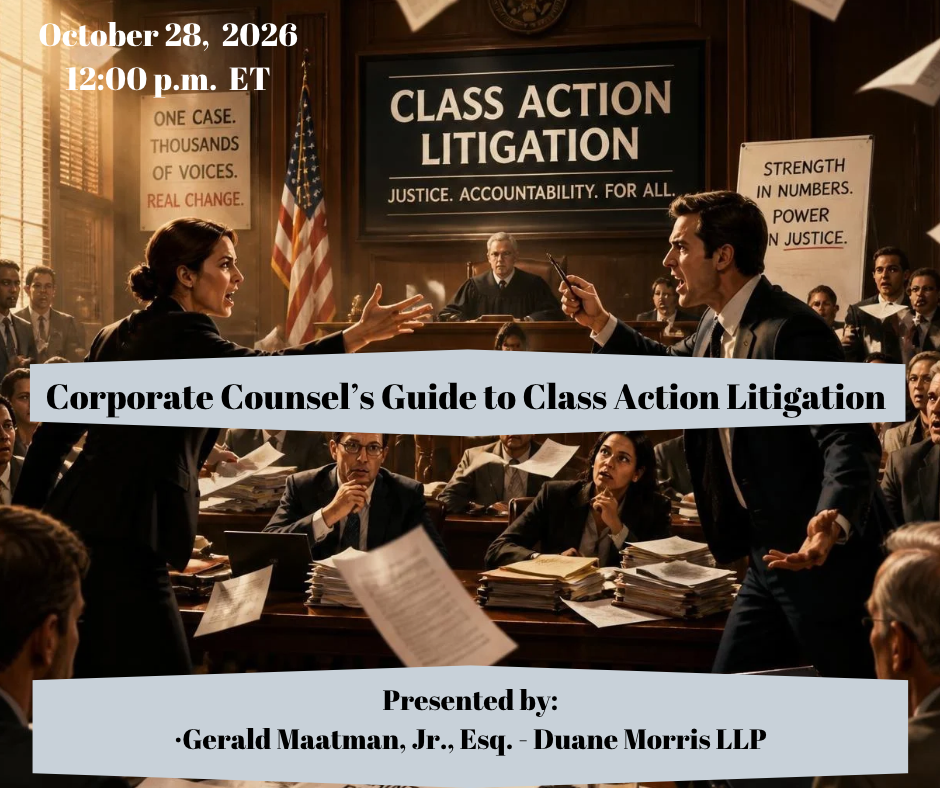
Class action litigation continues to expand in both number of filings and monetary exposure, with se...

The practice of law places legal professionals under extraordinary and often chronic stress, making ...
Confidentiality Agreements (also called NDAs) are too often treated as routine. So routine, th...

New York City’s new Non-Primary Residence Property Surcharge—commonly known as the pied-...
Class action waivers in arbitration agreements remain enforceable, but a decade of U.S. Supreme Cour...
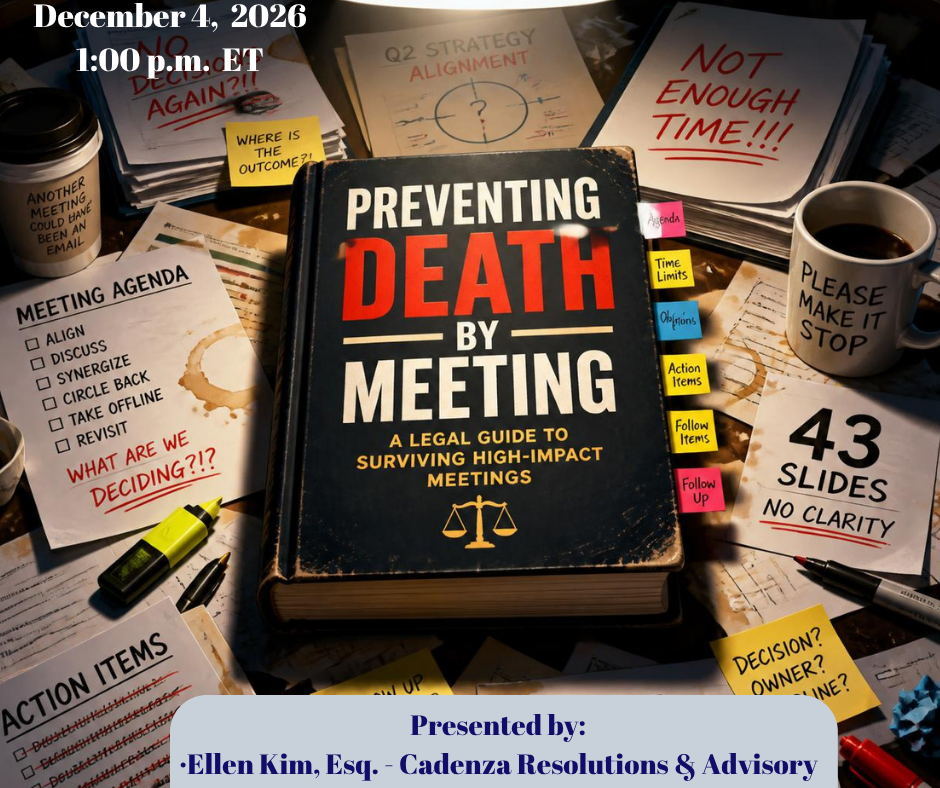
Lawyers lose hundreds of billable and operational hours every year to poorly managed meetings. Unfoc...
I was wrongfully separated from the military and I will get no military pay and disability retiremen...
As the largest purchaser of goods and services in the world, the United States Government requires f...
Adverse and derogatory information often has devastating effects on a contractor's ability to win co...

Class action litigation presents significant legal and business challenges for employers and corpora...