
Exciting new series on “Voice, Body and Movement for Lawyers – How to connect with the jury and find Justice Through Dramatic Technique!”
Click here to find out more
The Rules of Ethics apply to in-house counsel, but how they apply is not always as clear as it is for outside counsel.
This program goes through the Ethical Rules, from the Introduction and Scope to Rule 8.4, including case law analysis, showing how the Rules apply to in-house counsel. General topics include competence, conflicts, compensation, supervision of other lawyers and staff, dealing with the court and with other third parties, pro bono work, and general misconduct. Particular attention is paid to Rules 1.0, 1.1, 1.2., 1.5, 1.6, 1.7, 1.8, 1.9, 3.3, 3.4, 4.1, 4.2, 4.3, 4.4, 5.3, 5.4, 5.5, 5.6, 5.7, 6.1, and 8.4.
This program provides trial attorneys with a thorough grounding in the three principal currency repo...

I was wrongfully separated from the military and I will get no military pay and disability retiremen...
Turn decades of client relationships into lasting equity. This practical CLE shows attorneys how to ...
As the largest purchaser of goods and services in the world, the United States Government requires f...
During this course you will take a deep dive into federal bid protest litigation at the U.S. Court o...
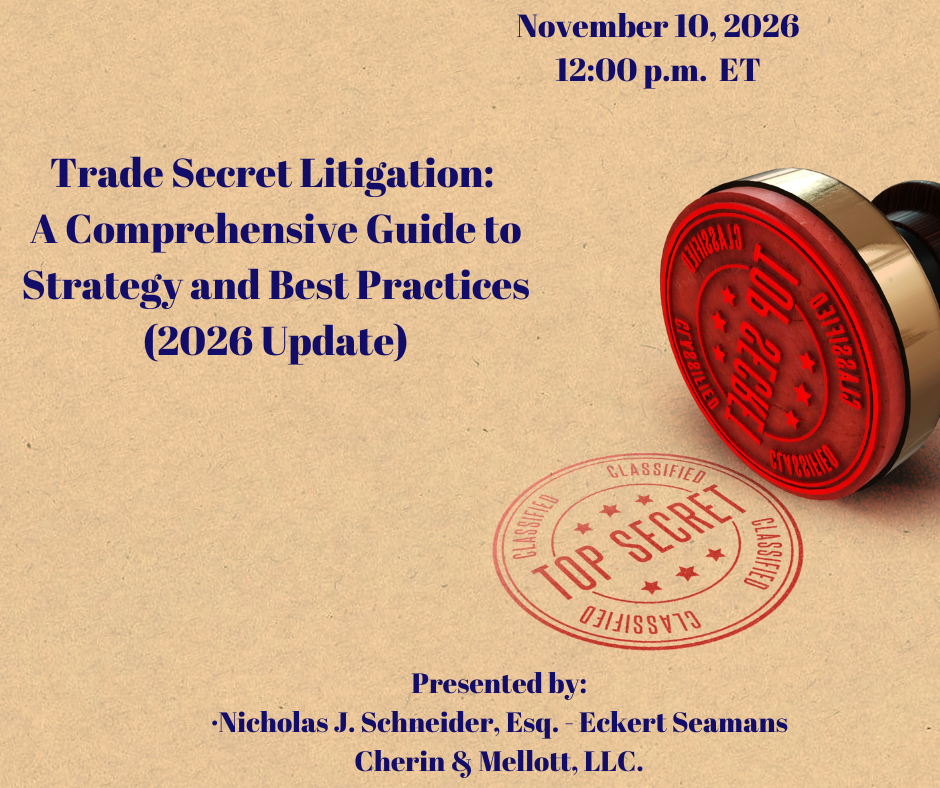
This course on trade secrets litigation provides real-world best practices through all key stages of...
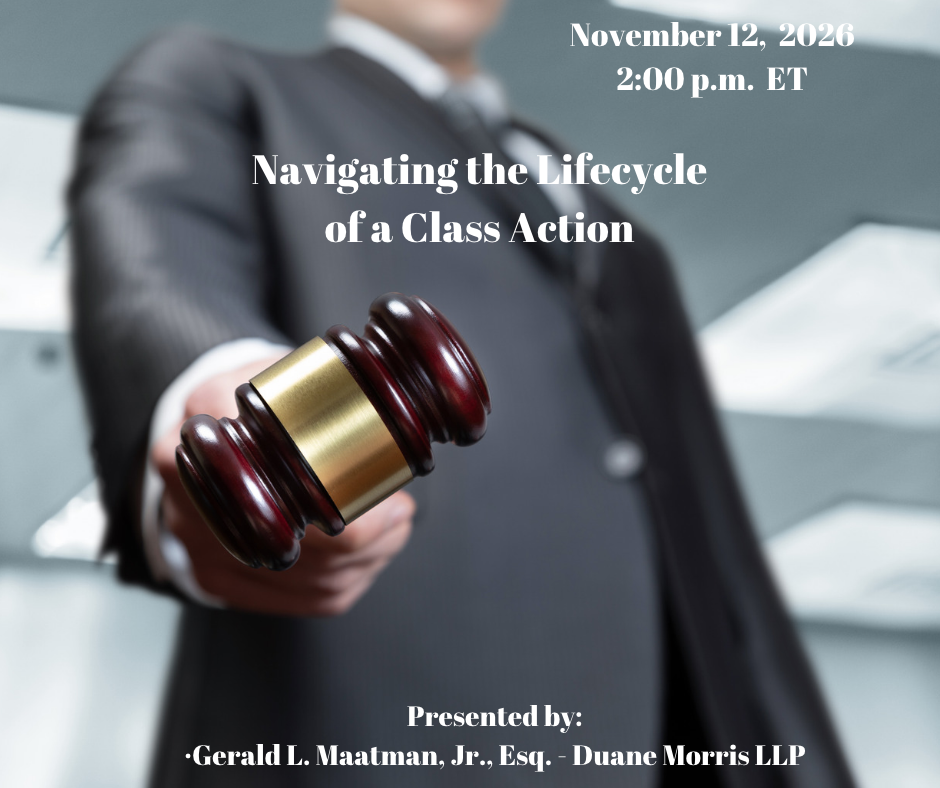
Class action litigation presents significant legal and business challenges for employers and corpora...
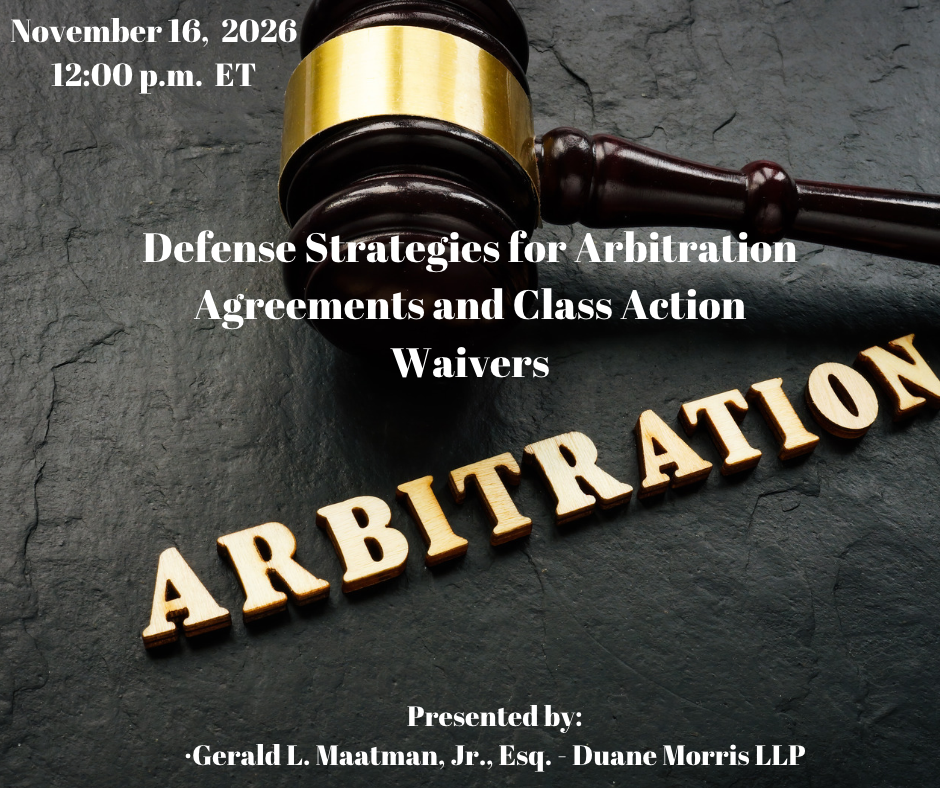
Class action waivers in arbitration agreements remain enforceable, but a decade of U.S. Supreme Cour...
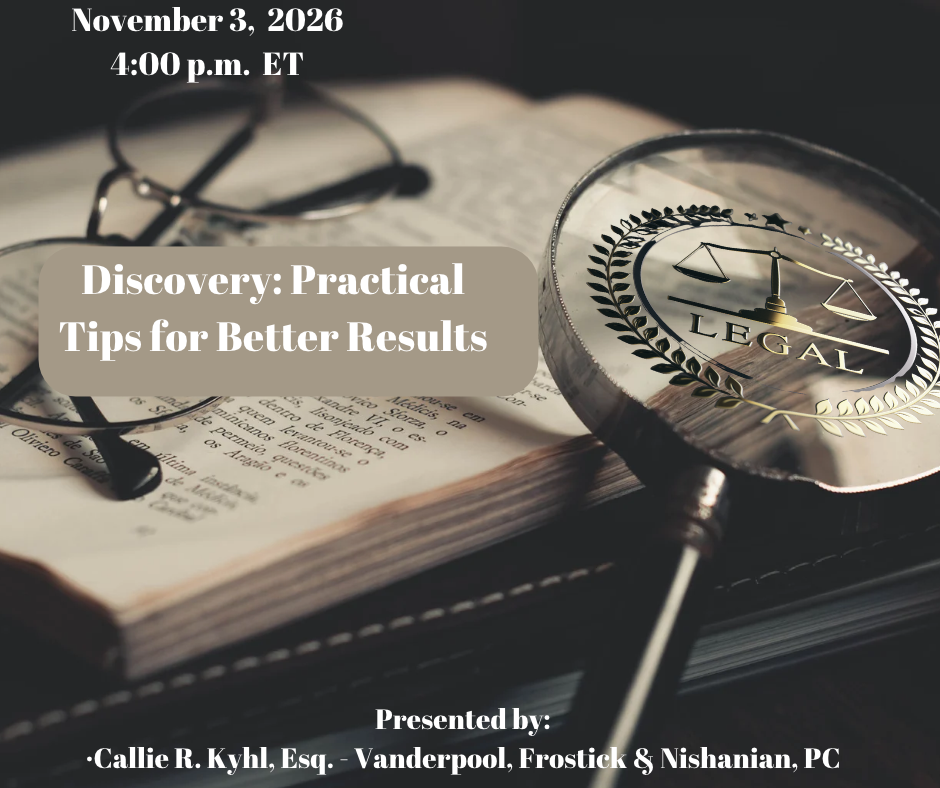
This program provides a practical roadmap to mastering every stage of the discovery process in civil...
Data privacy remains one of the most rapid areas of growth in the class action space. Plaintiffs con...