
Exciting new series on “Voice, Body and Movement for Lawyers – How to connect with the jury and find Justice Through Dramatic Technique!”
Click here to find out more
This program will cover the important (but often forgotten) professional responsibility and risk issues relating to the ending of the attorney-client relationship, including:
In the normal course – at the end of each engagement
• Terminating clients
• When is termination mandatory vs. permissive under the Rules of Professional Conduct?
• Specific requirements
• Obtaining permission from the tribunal
• Avoiding prejudice *Avoiding “Hot Potatoes”
• Post termination – whose files are they?
• The client selection and intake lessons
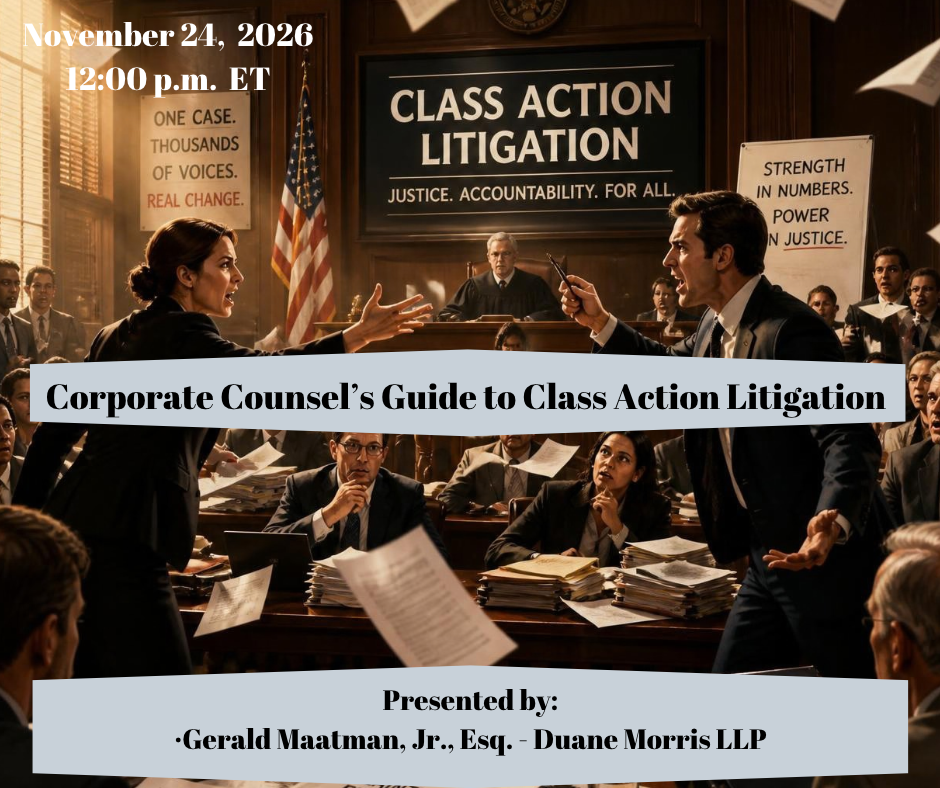
Class action litigation continues to expand in both number of filings and monetary exposure, with se...

During this course you will take a deep dive into federal bid protest litigation at the U.S. Court o...

This program provides trial attorneys with a thorough grounding in the three principal currency repo...

The practice of law places legal professionals under extraordinary and often chronic stress, making ...

Data privacy remains one of the most rapid areas of growth in the class action space. Plaintiffs con...
Class action waivers in arbitration agreements remain enforceable, but a decade of U.S. Supreme Cour...

Turn decades of client relationships into lasting equity. This practical CLE shows attorneys how to ...

I was wrongfully separated from the military and I will get no military pay and disability retiremen...

New York City’s new Non-Primary Residence Property Surcharge—commonly known as the pied-...
This course on trade secrets litigation provides real-world best practices through all key stages of...